2025-07-14
80 Acres of Pine Beetle Damage in Harnett County: Is the Timber Still Worth Selling?
How Timberline Forestry salvaged $214,000 in stumpage from an 80-acre southern pine beetle infestation in Harnett County by cruising fast, cutting the head of the spot, and replanting the same season.

Short answer: on 80 acres, almost certainly yes, and the value is not where most landowners think it is. The money is not in the red-topped trees you are staring at. It is in the green pine standing directly in front of the advancing spot, and that value drains a little every week you wait.
Here is how that played out on a tract we worked in the Harnett County area, with the actual mechanics of the cruise, the harvest, and what the landowner walked away with.
The situation: a spot nobody noticed until July
The tract was 80 acres total, about 68 acres of it a 27-year-old loblolly plantation on a decent Coastal Plain site, the rest hardwood drain and a field edge. The owner had inherited it and had not walked the interior in two years.
He called after a neighbor mentioned "dead pines by the powerline." By the time we got boots on the ground, the picture was textbook southern pine beetle:
Roughly 6 acres of solid red and brown crowns in the center of the spot. Bark sloughing, beetles long gone.
Another 8 acres of fading yellow-green crowns around that core, with fresh popcorn-sized pitch tubes on the trunks and S-shaped galleries under the bark.
Green, apparently healthy pine on all sides, with the head of the spot pushing toward the largest, best-stocked corner of the stand.
That last detail is the whole story. Southern pine beetle spots do not sit still in July. They expand outward from the head, and in a Carolina summer a spot can take new trees nearly every day.
What the cruise found
We cruised the tract within a week of the first call, because a cruise done a month late describes a forest that no longer exists. Timber cruising is a systematic inventory of what is standing: species, diameter, height, product class, and volume per acre.
The numbers on the merchantable 68 acres:
Total inventory: roughly 8,900 tons of pine.
Sawtimber: about 3,100 tons, mostly in the untouched green portion of the stand.
Chip-n-saw: about 3,600 tons.
Pulpwood: about 2,200 tons, including everything in the dead core.
The dead core cruised at roughly 700 tons and was written down to pulpwood across the board. Once the crown turns red the beetles have already flown, the sapwood carries blue stain fungus, and checking and ambrosia beetle holes follow. Blue-stained pine is still structurally sound wood, but it loses grade, and after a few months in the heat it loses the pulp market too.
What we did: cut the head, not just the dead
The plan was a salvage harvest with a buffer, executed in one move rather than in stages:
Remove the dead core while it still had pulp value.
Remove the entire fading ring, where beetles were actively breeding.
Cut a green buffer roughly 100 feet ahead of the head of the spot, taking healthy sawtimber. This is the part landowners resist and it is the part that stops the spread.
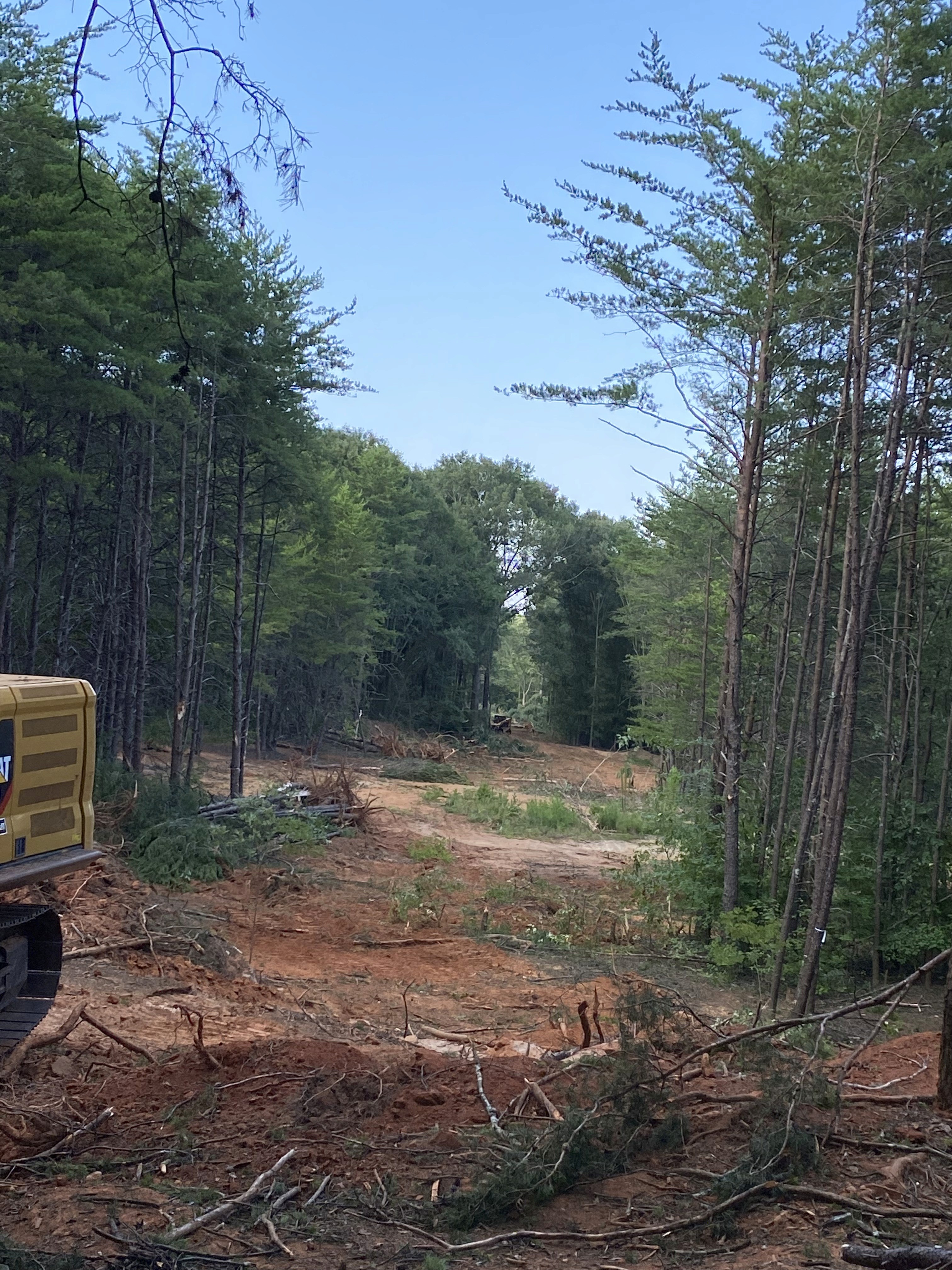
Clearcut the balance of the mature stand. At 27 years old with a spot running through it, holding the rest back to "see what happens" was a bet against a beetle population that had already proven what it would do.
Because we buy the timber and cut it with our own crews and equipment, the gap between decision and steel on the ground was three weeks, not three months. On a beetle tract that timeline matters more than haggling over stumpage price, which is most of why we run a single-partner model instead of brokering the sale and waiting on somebody else's logging schedule.
The result
Total gross stumpage to the landowner: about $214,000. Our modeled value for the same stand harvested healthy, on a normal schedule, was in the neighborhood of $268,000.
So the beetle cost him roughly 20 percent, concentrated almost entirely in the 14 acres of dead and dying timber. The other 54 acres sold as ordinary green pine at ordinary green pine prices, because we got them out before the spot reached them. Waiting one more season would very likely have flipped that ratio.
After the harvest, we sheared and piled the debris, ran a chemical site prep in late summer, and planted improved loblolly the following January at roughly 550 trees per acre. Site prep and planting ran a few hundred dollars an acre, and the tract restarted its rotation clean, with no residual beetle brood.
How to tell if you have actually missed the window
You are too late only when nothing green is left worth cutting. Practical tests:
Any green pine in the stand? There is a salvage sale. The green wood carries it.
Are the dead trees still holding bark and firm wood? Then pulpwood or chip markets may still take them. Bark falling off in sheets and soft, punky sapwood means those stems are cull.
Is it a small spot in cool weather? Under about 20 active trees between November and March, a cut-and-leave or targeted removal can be enough. In July, on 80 acres, that decision is already made for you.
Confirm the pest first. Ips engraver beetles and black turpentine beetle attack stressed pines too, and they call for different responses. The NC Forest Service will identify the insect and can advise on cost-share. Then get a real inventory. Our forest management team cruises the tract, and as direct timber buyers we can quote and cut without waiting on a third-party contractor's schedule. If you want the underlying pricing mechanics first, we break them down in what drives standing timber value in NC.
One last thing worth doing: talk to your CPA before the check clears. Timber sold under a salvage harvest may qualify for capital gains treatment, and depletion against your basis in the killed timber can matter on a tract this size.
If you have a spot running in Harnett, Johnston, or one of the surrounding counties, the useful next step is a cruise this month, not next quarter. Reach out and we will get someone in the stand.
Short answer: on 80 acres, almost certainly yes, and the value is not where most landowners think it is. The money is not in the red-topped trees you are staring at. It is in the green pine standing directly in front of the advancing spot, and that value drains a little every week you wait.
Here is how that played out on a tract we worked in the Harnett County area, with the actual mechanics of the cruise, the harvest, and what the landowner walked away with.
The situation: a spot nobody noticed until July
The tract was 80 acres total, about 68 acres of it a 27-year-old loblolly plantation on a decent Coastal Plain site, the rest hardwood drain and a field edge. The owner had inherited it and had not walked the interior in two years.
He called after a neighbor mentioned "dead pines by the powerline." By the time we got boots on the ground, the picture was textbook southern pine beetle:
Roughly 6 acres of solid red and brown crowns in the center of the spot. Bark sloughing, beetles long gone.
Another 8 acres of fading yellow-green crowns around that core, with fresh popcorn-sized pitch tubes on the trunks and S-shaped galleries under the bark.
Green, apparently healthy pine on all sides, with the head of the spot pushing toward the largest, best-stocked corner of the stand.
That last detail is the whole story. Southern pine beetle spots do not sit still in July. They expand outward from the head, and in a Carolina summer a spot can take new trees nearly every day.
What the cruise found
We cruised the tract within a week of the first call, because a cruise done a month late describes a forest that no longer exists. Timber cruising is a systematic inventory of what is standing: species, diameter, height, product class, and volume per acre.
The numbers on the merchantable 68 acres:
Total inventory: roughly 8,900 tons of pine.
Sawtimber: about 3,100 tons, mostly in the untouched green portion of the stand.
Chip-n-saw: about 3,600 tons.
Pulpwood: about 2,200 tons, including everything in the dead core.
The dead core cruised at roughly 700 tons and was written down to pulpwood across the board. Once the crown turns red the beetles have already flown, the sapwood carries blue stain fungus, and checking and ambrosia beetle holes follow. Blue-stained pine is still structurally sound wood, but it loses grade, and after a few months in the heat it loses the pulp market too.
What we did: cut the head, not just the dead
The plan was a salvage harvest with a buffer, executed in one move rather than in stages:
Remove the dead core while it still had pulp value.
Remove the entire fading ring, where beetles were actively breeding.
Cut a green buffer roughly 100 feet ahead of the head of the spot, taking healthy sawtimber. This is the part landowners resist and it is the part that stops the spread.
Clearcut the balance of the mature stand. At 27 years old with a spot running through it, holding the rest back to "see what happens" was a bet against a beetle population that had already proven what it would do.
Because we buy the timber and cut it with our own crews and equipment, the gap between decision and steel on the ground was three weeks, not three months. On a beetle tract that timeline matters more than haggling over stumpage price, which is most of why we run a single-partner model instead of brokering the sale and waiting on somebody else's logging schedule.
The result
Total gross stumpage to the landowner: about $214,000. Our modeled value for the same stand harvested healthy, on a normal schedule, was in the neighborhood of $268,000.
So the beetle cost him roughly 20 percent, concentrated almost entirely in the 14 acres of dead and dying timber. The other 54 acres sold as ordinary green pine at ordinary green pine prices, because we got them out before the spot reached them. Waiting one more season would very likely have flipped that ratio.
After the harvest, we sheared and piled the debris, ran a chemical site prep in late summer, and planted improved loblolly the following January at roughly 550 trees per acre. Site prep and planting ran a few hundred dollars an acre, and the tract restarted its rotation clean, with no residual beetle brood.
How to tell if you have actually missed the window
You are too late only when nothing green is left worth cutting. Practical tests:
Any green pine in the stand? There is a salvage sale. The green wood carries it.
Are the dead trees still holding bark and firm wood? Then pulpwood or chip markets may still take them. Bark falling off in sheets and soft, punky sapwood means those stems are cull.
Is it a small spot in cool weather? Under about 20 active trees between November and March, a cut-and-leave or targeted removal can be enough. In July, on 80 acres, that decision is already made for you.
Confirm the pest first. Ips engraver beetles and black turpentine beetle attack stressed pines too, and they call for different responses. The NC Forest Service will identify the insect and can advise on cost-share. Then get a real inventory. Our forest management team cruises the tract, and as direct timber buyers we can quote and cut without waiting on a third-party contractor's schedule. If you want the underlying pricing mechanics first, we break them down in what drives standing timber value in NC.
One last thing worth doing: talk to your CPA before the check clears. Timber sold under a salvage harvest may qualify for capital gains treatment, and depletion against your basis in the killed timber can matter on a tract this size.
If you have a spot running in Harnett, Johnston, or one of the surrounding counties, the useful next step is a cruise this month, not next quarter. Reach out and we will get someone in the stand.