May 20th, 2026
Integrated Vegetation Management (IVM) and ANSI A300 Part 7: A Modern UVM Playbook for Utilities, Co-ops, and DOTs
What utility vegetation management buyers should expect from a modern UVM contractor. Covers Integrated Vegetation Management (IVM), ANSI A300 Part 7, FAC-003 considerations, and how to evaluate vendors beyond bare-ground spraying.
Integrated Vegetation Management (IVM) and ANSI A300 Part 7: A Modern UVM Playbook for Utilities, Co-ops, and DOTs
The cheapest right-of-way maintenance program is also, eventually, the most expensive one.
A bare-ground spray program looks efficient in year one. By year five it's a stack of regrowth, herbicide-resistant species, public complaints, NERC FAC-003 documentation gaps, and a reclear bid two or three times the size of routine maintenance. The utility, co-op, or DOT that walked away from Integrated Vegetation Management to save 8% on the line item ends up paying for it on the back end.
Integrated Vegetation Management (IVM) isn't a contractor's marketing pitch. It's the industry standard — published in ANSI A300 Part 7 (Integrated Vegetation Management) and ANSI A300 Part 1 / Part 2 for tree maintenance, and it's the framework every modern utility vegetation management (UVM) program is measured against.
This piece is for the people on the buying side of UVM: utility vegetation managers, co-op operations leads, DOT roadside maintenance coordinators, and procurement teams writing the next ROW maintenance RFP. It walks through what IVM actually is, what ANSI A300 Part 7 says, and the practical questions worth asking the next vendor that pitches you.
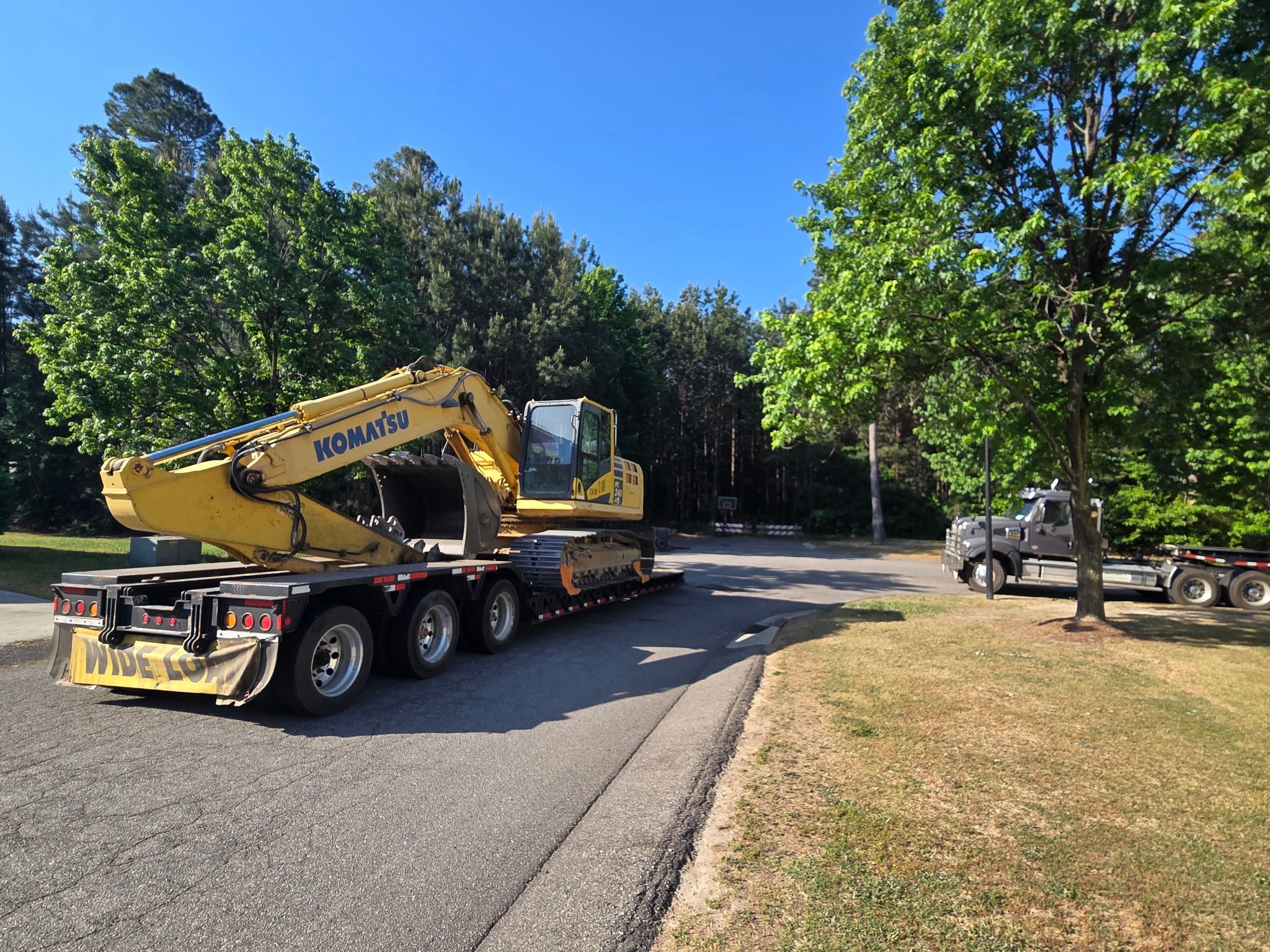
For context, Timberline's UVM division provides ROW initial clearing and reclear, mechanical maintenance, herbicide application, danger tree removal, 24/7 storm response, and access road construction across NC, VA, SC, and GA. The framework below is how we think about it on the ground.
What Integrated Vegetation Management actually means
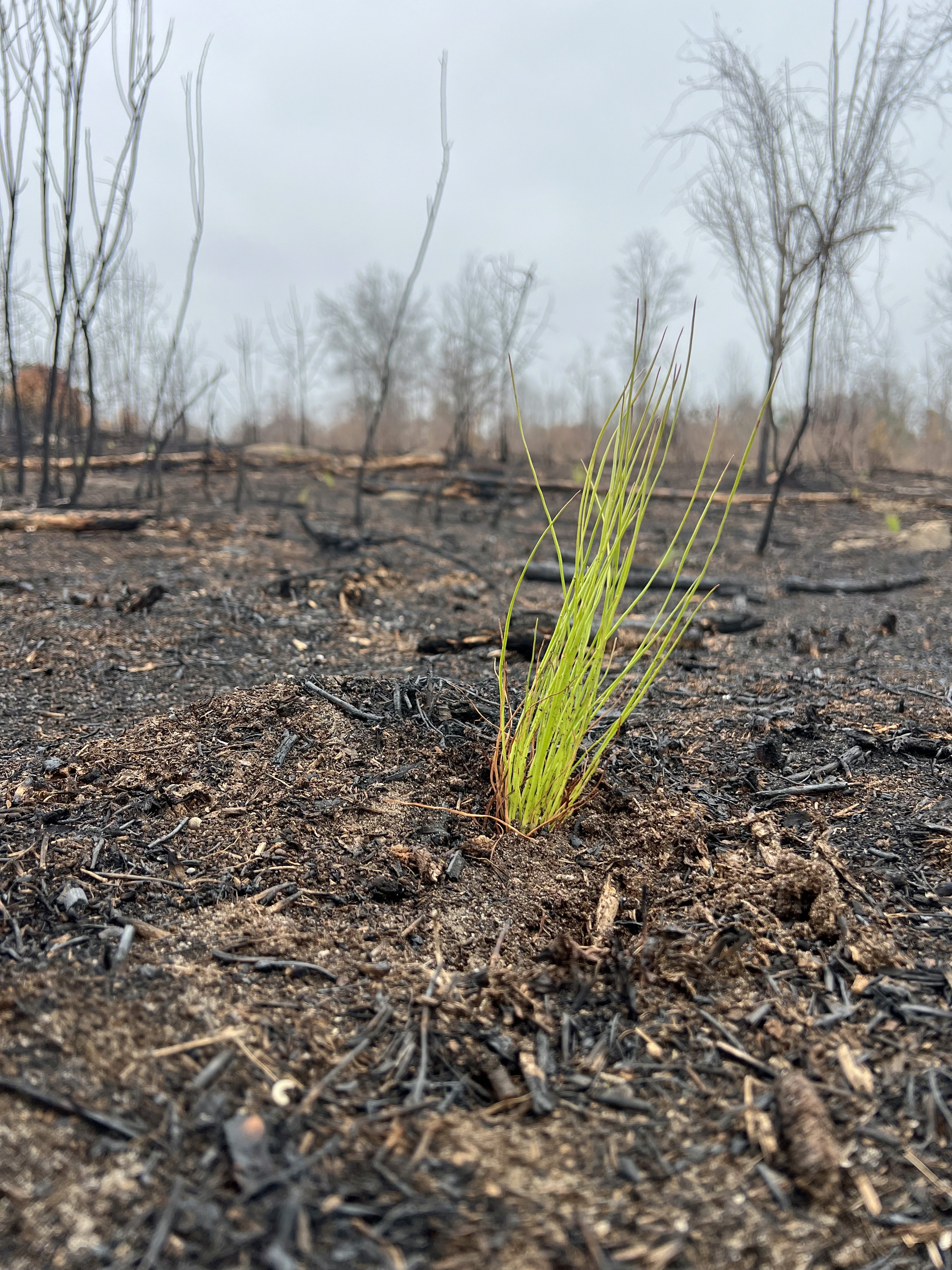
IVM is a long-term approach to managing vegetation on rights-of-way. It uses a combination of mechanical, chemical, biological, and cultural methods (selected based on the site, the target species, the wildlife and water resources present, and the maintenance objectives) to establish stable, low-growing, compatible plant communities that resist the incompatible species (tall-growing trees) the utility doesn't want in the corridor.
The shorthand: instead of fighting the corridor every cycle, you shape it into a self-maintaining plant community over time.
A real IVM program has five elements:
A defined management objective for each ROW or ROW segment. What does "compatible vegetation" look like in this segment? Native grasses and forbs? Low-growing shrubs? A specific NCSU or state recommendation?
Inventory and assessment. What's growing there now? What's the regrowth pattern? What sensitive features (streams, wetlands, T&E species, public uses) require special handling?
Action thresholds. At what point does a section warrant treatment? Tree height? Stem density? Encroachment toward minimum vegetation clearance distance?
A selection of treatment methods. Hand-cut, mechanical mowing, mulching, selective herbicide application (foliar, basal bark, cut-stump, stem injection), and biological controls; each chosen for the site, not applied uniformly across the system.
Monitoring and adjustment. Documented results, refined approach next cycle.
ANSI A300 Part 7 is the consensus standard that codifies this approach. Companion ISA Best Management Practices ("Utility Pruning of Trees" and "Integrated Vegetation Management") expand on the operational detail.
Why utilities are moving away from bare-ground programs
Three reasons keep coming up:
1. The economics. Repeated bare-ground spraying suppresses native ground cover and leaves bare soil that's easy for fast-growing pioneer species to recolonize. Year over year, the regrowth pressure increases. A well-designed IVM program reduces stem density and tree pressure over the long term, so cycle costs trend down rather than up.
2. The regulatory environment. NERC FAC-003-4 requires bulk electric system transmission owners to manage vegetation to prevent encroachment into Minimum Vegetation Clearance Distance (MVCD). The documentation burden is real. IVM programs, with their explicit inventories, thresholds, and treatment records, produce the kind of records that hold up to NERC audits and OFI follow-ups. Bare-ground programs typically don't generate that documentation natively.
3. The public-facing side. Environmental groups, landowners adjacent to the ROW, and state regulators are paying more attention to herbicide use and pollinator habitat. IVM corridors, which often resemble managed meadows, read very differently to the public than bare-ground corridors do. Multiple utilities have publicly committed to IVM as part of their pollinator and ESG programs.
What ANSI A300 Part 7 says (in the buyer's language)
For a UVM buyer, the relevant takeaways from A300 Part 7 are operational:
Management plans should be written. Not verbal, not assumed. The plan defines the objective, the inventory, the action thresholds, and the methods.
Treatments should be species-selective wherever feasible. Foliar application that targets undesirable species while leaving compatible cover in place is preferred over broad-spectrum applications when the site supports it.
Applicators must be appropriately licensed. In NC, that means NCDA&CS pesticide applicator licensing in the appropriate categories. ROW herbicide applicators must be licensed in Category N (Right-of-Way Pest Control) or equivalent.
Worker qualifications matter. ISA Certified Arborists, ISA Utility Specialists, and crews trained to OSHA 1910.269 standards for line-clearance tree work. The buyer should ask, not assume.
Documentation is part of the deliverable. Daily work records, herbicide application records (product, rate, target species, weather conditions), and as-built maps of treated areas. This documentation is what makes a program defensible at audit.
A practical RFP / vendor evaluation framework
Most ROW maintenance RFPs ask the right questions about price and capacity. The questions that separate vendors who can actually run an IVM program from the ones who can't:
"Describe how you would approach the first three cycles of an IVM transition on a segment that has been on bare-ground for the last decade." A real answer talks about initial mechanical reduction of stem density, then selective foliar herbicide application timed to the species and growth stage, then a transition to a maintenance cycle. A non-answer talks about how often the crew would come back.
"Who on your team is responsible for the prescription on a given segment?" Ideally an ISA Certified Utility Specialist or comparable qualification. If the answer is "the foreman decides," that's not a program, that's a habit.
"How do you document herbicide applications, and what do those records look like at the end of a cycle?" Ask for a redacted sample. The records should show date, location, applicator license number, product, rate, target species, and weather.
"What's your protocol for sensitive areas; streams, wetlands, pollinator habitat, T&E species?" A vendor with real IVM experience will already have an answer for buffered no-spray zones and approved alternative methods.
"What's your storm response model?" ROW maintenance and storm response live in the same crews on most utility programs. A vendor who can't deploy storm crews 24/7 is going to be a problem the first time a major event hits.
"How do you handle danger trees outside the ROW?" Trees standing outside the corridor that can fall into it on failure are a big share of vegetation-related outages. A real program identifies, assesses, and removes them under landowner permission protocols; not just the trees inside the ROW.
The answers tell you whether you're talking to a contractor who runs IVM as a structured program, or one who's calling traditional ROW spraying "IVM" because the RFP asked for it.
Where Timberline fits
Timberline's UVM division was built around the same integrated model as the rest of our company: own crews, own equipment, in-house herbicide application capability, and in-house heavy-haul fleet to move crews and equipment between service areas across the Southeast. We work with public and private utility providers, electric co-ops, and Departments of Transportation.
Our service lines map directly to what a modern UVM program requires:
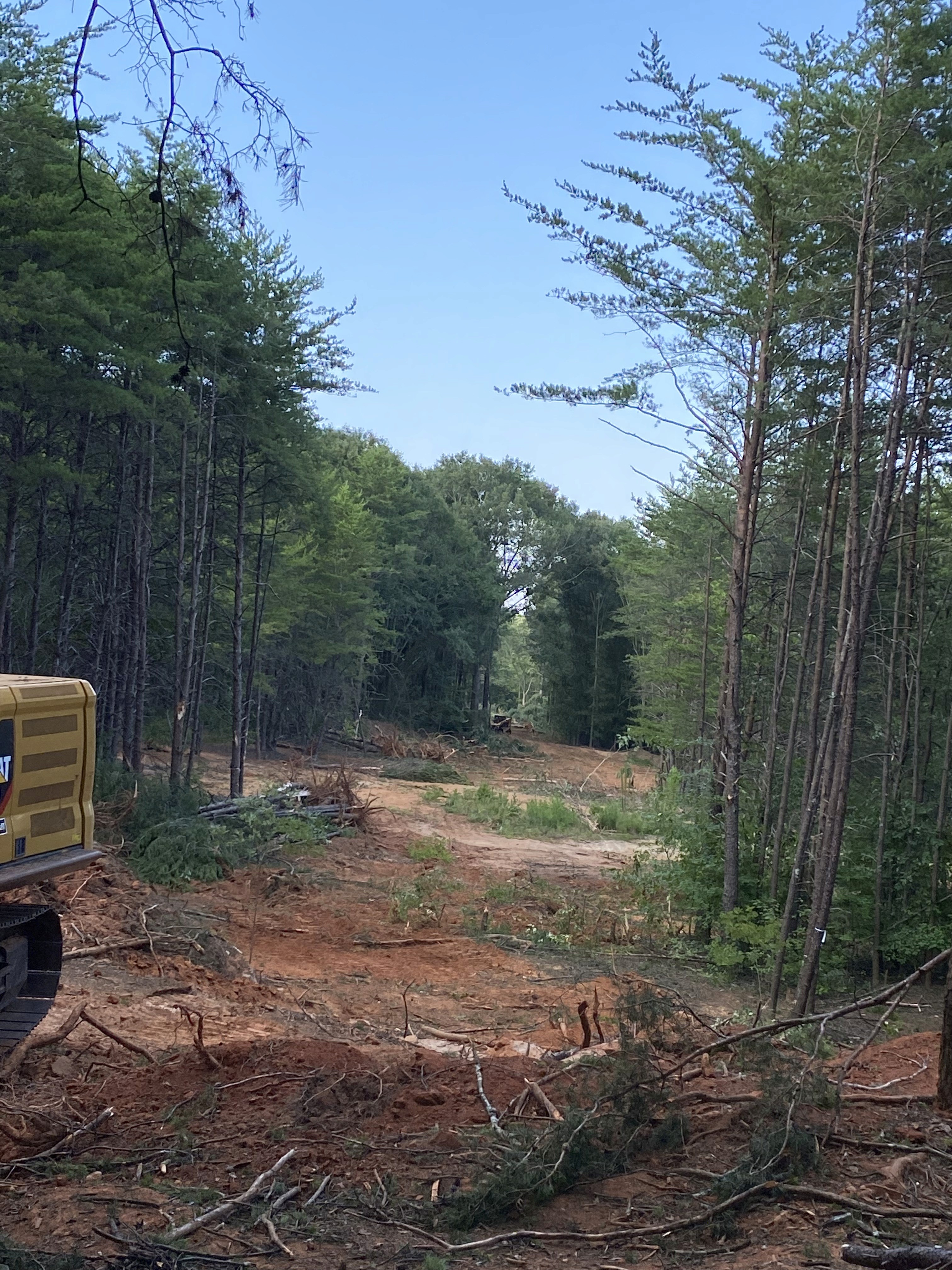
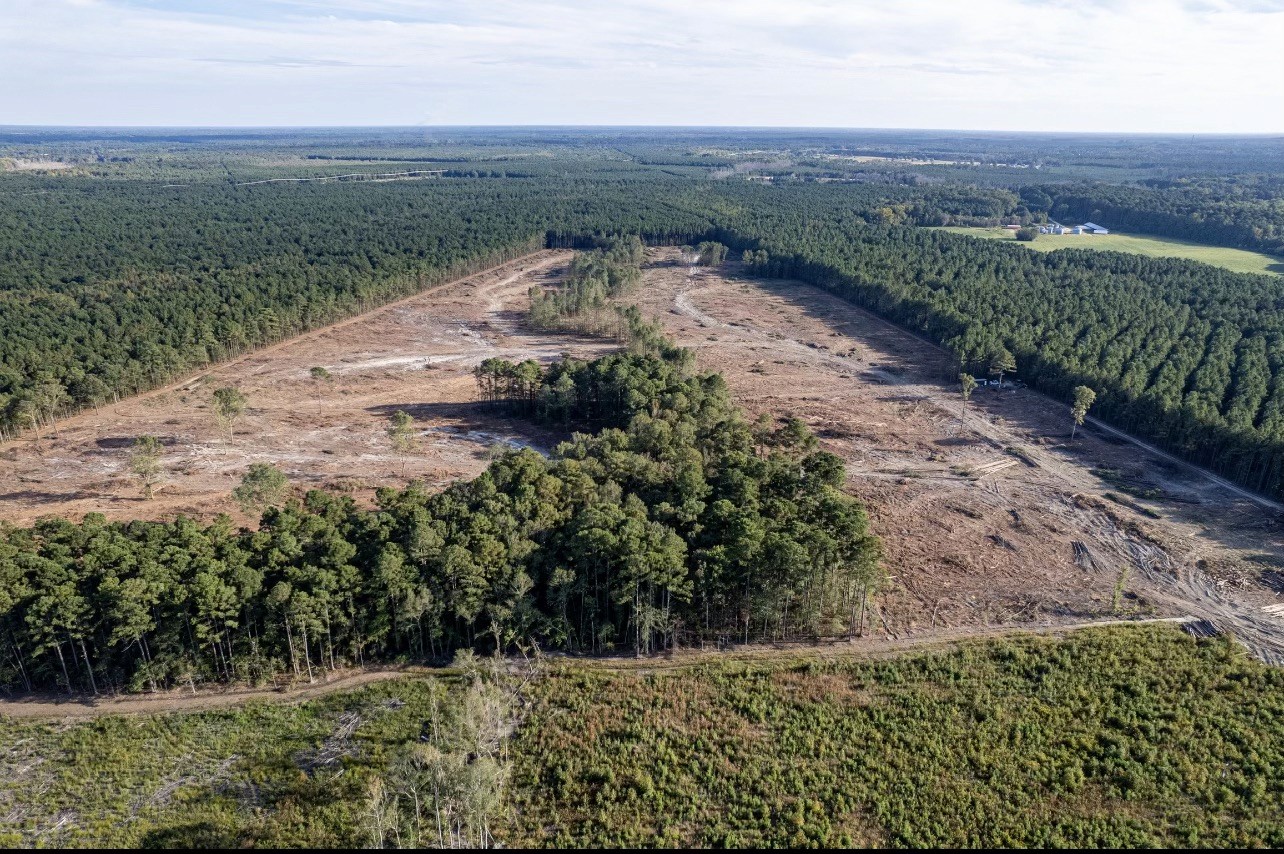
ROW initial clearing and reclear: for new corridors and intensive recovery of overgrown existing ROWs.
Mechanical maintenance: mowing and mulching at the cycles and equipment scale the corridor demands.
Herbicide application: licensed applicators, selective methods, and the documentation an audit requires.
Danger tree assessment and removal: proactive identification and removal of off-ROW threats.
24/7 emergency storm response: rapid-response crews deployed to clear debris and provide access for line crews.
Access road construction and maintenance: keeping sites accessible for routine and emergency work.
We also wrote about the broader storm and risk picture for corporate landowners and infrastructure operators in A Risk Mitigation Framework for Land Assets in the Southeast.
Evaluating a UVM program or vendor in NC, VA, SC, or GA?
If you're planning a UVM transition, writing the next maintenance RFP, or trying to find a partner who can handle ROW work and storm response across multiple states, we'd like to talk.
Call (919) 909-8630 or request a consultation. We can walk a segment, review your current program documentation, and put together a realistic proposal; including how an IVM transition would sequence across the cycles you're planning.
Integrated Vegetation Management (IVM) and ANSI A300 Part 7: A Modern UVM Playbook for Utilities, Co-ops, and DOTs
The cheapest right-of-way maintenance program is also, eventually, the most expensive one.
A bare-ground spray program looks efficient in year one. By year five it's a stack of regrowth, herbicide-resistant species, public complaints, NERC FAC-003 documentation gaps, and a reclear bid two or three times the size of routine maintenance. The utility, co-op, or DOT that walked away from Integrated Vegetation Management to save 8% on the line item ends up paying for it on the back end.
Integrated Vegetation Management (IVM) isn't a contractor's marketing pitch. It's the industry standard — published in ANSI A300 Part 7 (Integrated Vegetation Management) and ANSI A300 Part 1 / Part 2 for tree maintenance, and it's the framework every modern utility vegetation management (UVM) program is measured against.
This piece is for the people on the buying side of UVM: utility vegetation managers, co-op operations leads, DOT roadside maintenance coordinators, and procurement teams writing the next ROW maintenance RFP. It walks through what IVM actually is, what ANSI A300 Part 7 says, and the practical questions worth asking the next vendor that pitches you.
For context, Timberline's UVM division provides ROW initial clearing and reclear, mechanical maintenance, herbicide application, danger tree removal, 24/7 storm response, and access road construction across NC, VA, SC, and GA. The framework below is how we think about it on the ground.
What Integrated Vegetation Management actually means
IVM is a long-term approach to managing vegetation on rights-of-way. It uses a combination of mechanical, chemical, biological, and cultural methods (selected based on the site, the target species, the wildlife and water resources present, and the maintenance objectives) to establish stable, low-growing, compatible plant communities that resist the incompatible species (tall-growing trees) the utility doesn't want in the corridor.
The shorthand: instead of fighting the corridor every cycle, you shape it into a self-maintaining plant community over time.
A real IVM program has five elements:
A defined management objective for each ROW or ROW segment. What does "compatible vegetation" look like in this segment? Native grasses and forbs? Low-growing shrubs? A specific NCSU or state recommendation?
Inventory and assessment. What's growing there now? What's the regrowth pattern? What sensitive features (streams, wetlands, T&E species, public uses) require special handling?
Action thresholds. At what point does a section warrant treatment? Tree height? Stem density? Encroachment toward minimum vegetation clearance distance?
A selection of treatment methods. Hand-cut, mechanical mowing, mulching, selective herbicide application (foliar, basal bark, cut-stump, stem injection), and biological controls; each chosen for the site, not applied uniformly across the system.
Monitoring and adjustment. Documented results, refined approach next cycle.
ANSI A300 Part 7 is the consensus standard that codifies this approach. Companion ISA Best Management Practices ("Utility Pruning of Trees" and "Integrated Vegetation Management") expand on the operational detail.
Why utilities are moving away from bare-ground programs
Three reasons keep coming up:
1. The economics. Repeated bare-ground spraying suppresses native ground cover and leaves bare soil that's easy for fast-growing pioneer species to recolonize. Year over year, the regrowth pressure increases. A well-designed IVM program reduces stem density and tree pressure over the long term, so cycle costs trend down rather than up.
2. The regulatory environment. NERC FAC-003-4 requires bulk electric system transmission owners to manage vegetation to prevent encroachment into Minimum Vegetation Clearance Distance (MVCD). The documentation burden is real. IVM programs, with their explicit inventories, thresholds, and treatment records, produce the kind of records that hold up to NERC audits and OFI follow-ups. Bare-ground programs typically don't generate that documentation natively.
3. The public-facing side. Environmental groups, landowners adjacent to the ROW, and state regulators are paying more attention to herbicide use and pollinator habitat. IVM corridors, which often resemble managed meadows, read very differently to the public than bare-ground corridors do. Multiple utilities have publicly committed to IVM as part of their pollinator and ESG programs.
What ANSI A300 Part 7 says (in the buyer's language)
For a UVM buyer, the relevant takeaways from A300 Part 7 are operational:
Management plans should be written. Not verbal, not assumed. The plan defines the objective, the inventory, the action thresholds, and the methods.
Treatments should be species-selective wherever feasible. Foliar application that targets undesirable species while leaving compatible cover in place is preferred over broad-spectrum applications when the site supports it.
Applicators must be appropriately licensed. In NC, that means NCDA&CS pesticide applicator licensing in the appropriate categories. ROW herbicide applicators must be licensed in Category N (Right-of-Way Pest Control) or equivalent.
Worker qualifications matter. ISA Certified Arborists, ISA Utility Specialists, and crews trained to OSHA 1910.269 standards for line-clearance tree work. The buyer should ask, not assume.
Documentation is part of the deliverable. Daily work records, herbicide application records (product, rate, target species, weather conditions), and as-built maps of treated areas. This documentation is what makes a program defensible at audit.
A practical RFP / vendor evaluation framework
Most ROW maintenance RFPs ask the right questions about price and capacity. The questions that separate vendors who can actually run an IVM program from the ones who can't:
"Describe how you would approach the first three cycles of an IVM transition on a segment that has been on bare-ground for the last decade." A real answer talks about initial mechanical reduction of stem density, then selective foliar herbicide application timed to the species and growth stage, then a transition to a maintenance cycle. A non-answer talks about how often the crew would come back.
"Who on your team is responsible for the prescription on a given segment?" Ideally an ISA Certified Utility Specialist or comparable qualification. If the answer is "the foreman decides," that's not a program, that's a habit.
"How do you document herbicide applications, and what do those records look like at the end of a cycle?" Ask for a redacted sample. The records should show date, location, applicator license number, product, rate, target species, and weather.
"What's your protocol for sensitive areas; streams, wetlands, pollinator habitat, T&E species?" A vendor with real IVM experience will already have an answer for buffered no-spray zones and approved alternative methods.
"What's your storm response model?" ROW maintenance and storm response live in the same crews on most utility programs. A vendor who can't deploy storm crews 24/7 is going to be a problem the first time a major event hits.
"How do you handle danger trees outside the ROW?" Trees standing outside the corridor that can fall into it on failure are a big share of vegetation-related outages. A real program identifies, assesses, and removes them under landowner permission protocols; not just the trees inside the ROW.
The answers tell you whether you're talking to a contractor who runs IVM as a structured program, or one who's calling traditional ROW spraying "IVM" because the RFP asked for it.
Where Timberline fits
Timberline's UVM division was built around the same integrated model as the rest of our company: own crews, own equipment, in-house herbicide application capability, and in-house heavy-haul fleet to move crews and equipment between service areas across the Southeast. We work with public and private utility providers, electric co-ops, and Departments of Transportation.
Our service lines map directly to what a modern UVM program requires:
ROW initial clearing and reclear: for new corridors and intensive recovery of overgrown existing ROWs.
Mechanical maintenance: mowing and mulching at the cycles and equipment scale the corridor demands.
Herbicide application: licensed applicators, selective methods, and the documentation an audit requires.
Danger tree assessment and removal: proactive identification and removal of off-ROW threats.
24/7 emergency storm response: rapid-response crews deployed to clear debris and provide access for line crews.
Access road construction and maintenance: keeping sites accessible for routine and emergency work.
We also wrote about the broader storm and risk picture for corporate landowners and infrastructure operators in A Risk Mitigation Framework for Land Assets in the Southeast.
Evaluating a UVM program or vendor in NC, VA, SC, or GA?
If you're planning a UVM transition, writing the next maintenance RFP, or trying to find a partner who can handle ROW work and storm response across multiple states, we'd like to talk.
Call (919) 909-8630 or request a consultation. We can walk a segment, review your current program documentation, and put together a realistic proposal; including how an IVM transition would sequence across the cycles you're planning.