2025-01-28
Forestry Mulching vs Traditional Land Clearing for a 40-Acre Property: Which Method Wins?
A side-by-side breakdown of forestry mulching and traditional land clearing for 40-acre tracts, covering cost, speed, debris handling, and which method fits your land's future use.

On a 40-acre tract, forestry mulching wins when you want to keep the soil intact, work through mixed underbrush, and skip hauling debris off site. Traditional land clearing (dozer, excavator, grub, and haul) wins when the land is heading straight into construction, agriculture, or pasture and every stump has to go. The right call depends on what happens to the ground next, not on which method sounds cheaper on paper.
Here is how the two methods actually compare on a realistic Southeastern parcel.
The two methods in plain terms
Forestry mulching uses a single machine, typically a tracked carrier with a rotary or drum mulching head, to grind standing trees, brush, and stumps down to a chip layer that stays on the ground as mulch. One operator, one pass, no burn piles, no trucks lined up at the gate.
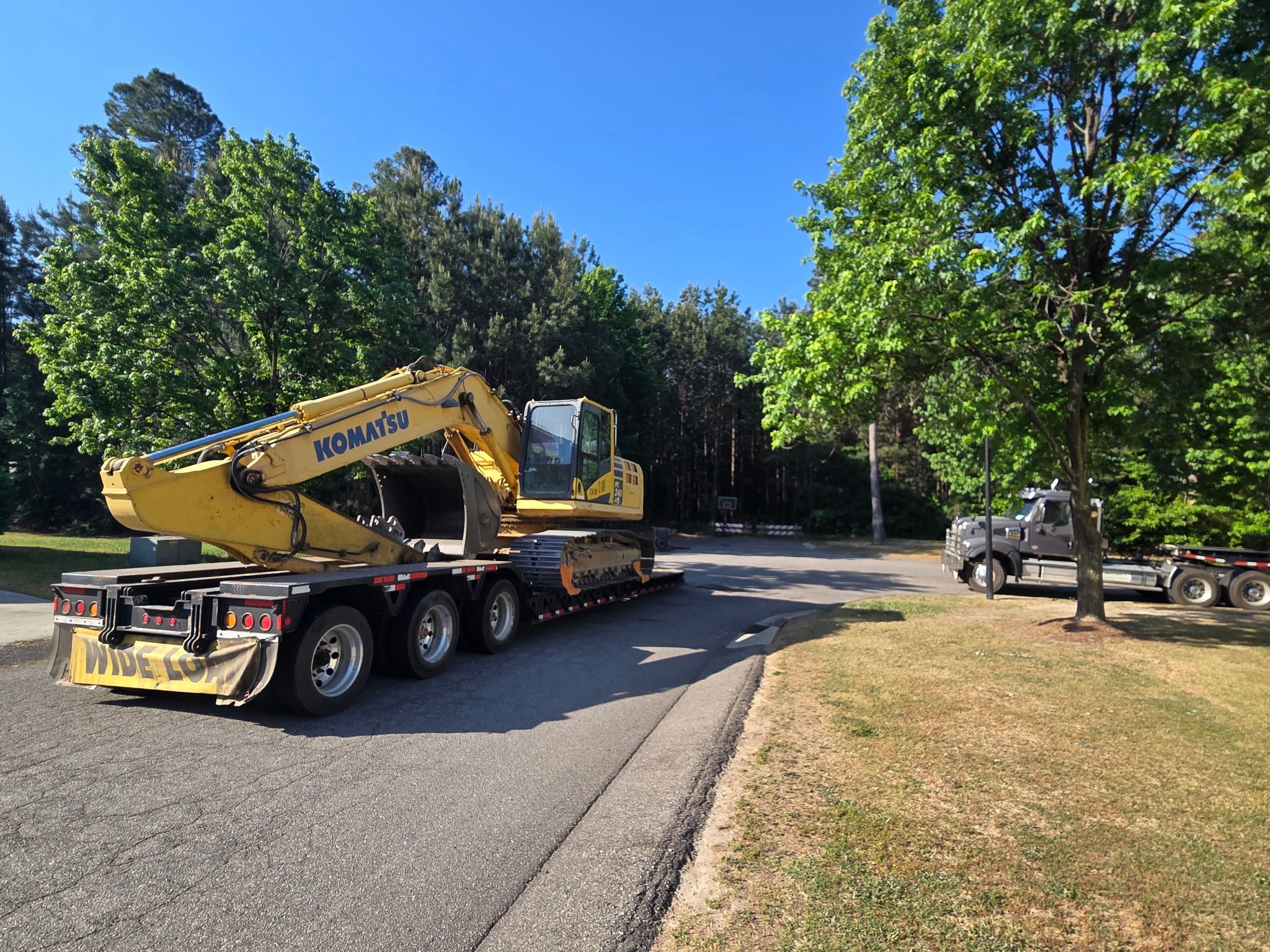
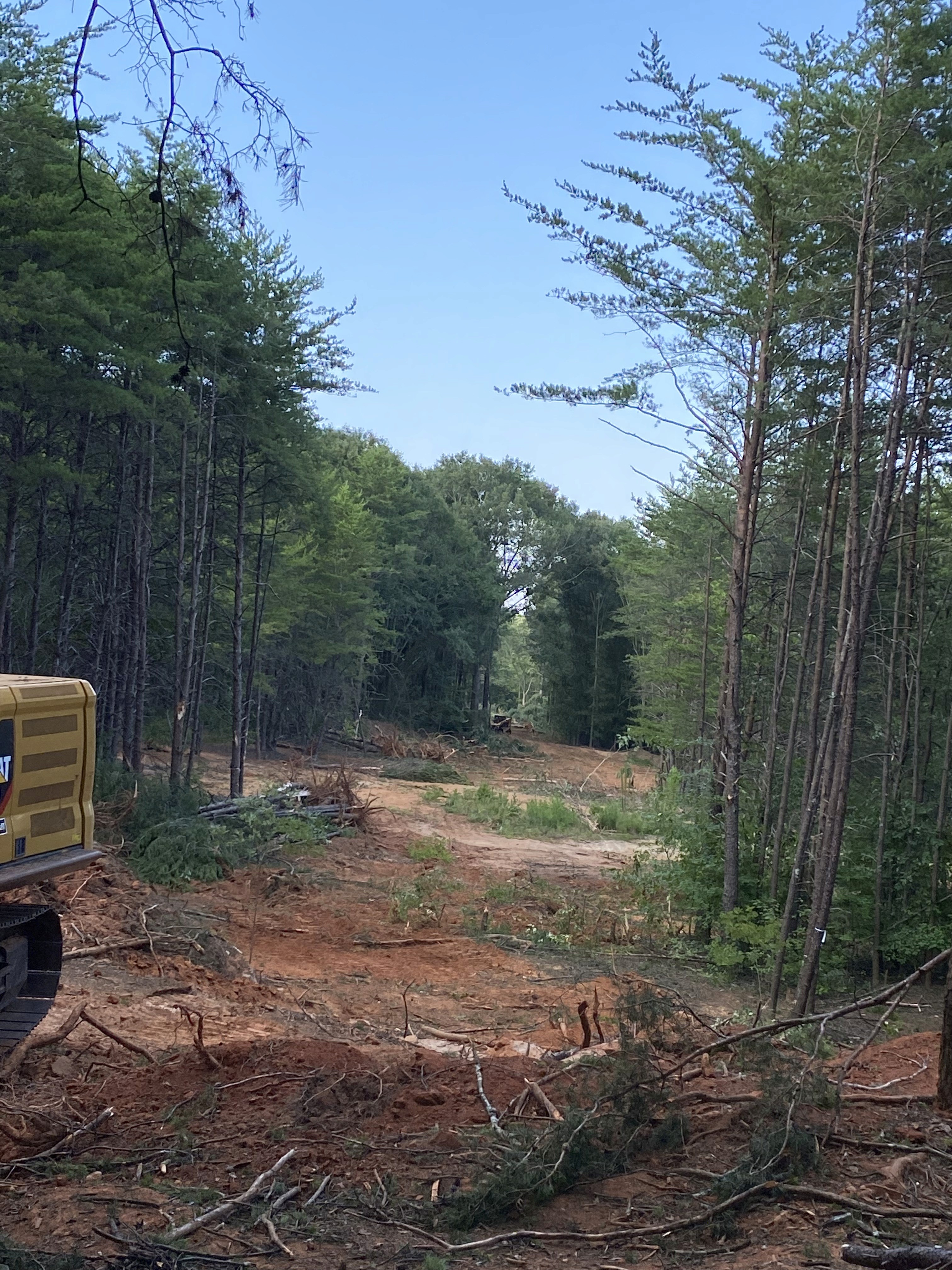
Traditional land clearing is a sequenced operation. Dozers and feller-bunchers knock down and pile timber. Excavators pull stumps. Grapples load debris into trucks, or crews burn piles under a permit. Then the site gets rough-graded. It is heavier, faster on open acreage, and it leaves you with bare mineral soil.
Cost on 40 acres
Numbers move with terrain, stem density, and how far trucks have to travel, but the pattern holds:
Forestry mulching: typically runs per-acre or per-hour, and scales with how thick the material is. Lighter underbrush and small-diameter pines move quickly. A hardwood-heavy tract with 12-inch-plus stems slows the head down and pushes the price up.
Traditional clearing: priced by the scope (fell, pile, grub, haul, burn, grade). You pay for more machines and more labor, plus hauling or burn management. On thick, mature timber where the wood has merchantable value, a harvest first can offset a meaningful share of the clearing cost.
On 40 acres of mixed pine and hardwood underbrush, mulching is usually the lower total spend when no grubbing is needed. Once you add full stump removal and haul-off, traditional clearing catches up and often overtakes it.
Speed and site impact
A capable mulcher can cover roughly 1 to 3 acres a day depending on density. A traditional crew with the right iron can clear more acres per day on open, dry ground, but the site is out of service longer because of piling, burning windows, and grading behind the clearing.
Mulching leaves the root mat in place, which matters on erodible Piedmont clay and near streams. Traditional clearing exposes soil, so an erosion and sediment control plan is not optional on any tract that touches waters of the state or exceeds the disturbance threshold.
Debris: mulch layer vs piles and trucks
This is the deciding factor for a lot of owners.
Mulching: debris becomes a 2 to 6 inch chip layer that decomposes into the topsoil over 1 to 3 years. No burn permit. No smoke complaints. No trucks.
Traditional: debris becomes burn piles or truckloads. Burning requires a permit, safe weather, and a watch. Hauling means finding a landfill or grinding site and paying tipping fees. On merchantable timber, the better move is often a harvest that turns the wood into revenue instead of waste, which Timberline handles directly through Timberline Forest Products.
What the land will become
This is the real fork in the road.
Recreational, hunting, pasture improvement, view lines, boundary reclamation, fuel-load reduction, easement maintenance: mulching. You keep the soil, the seed bank, and the drainage patterns.
House pad, subdivision, commercial pad, ag conversion to row crop, ponds, roads: traditional clearing. You need stumps out and dirt worked. Mulching leaves the stumps in place, and no builder will pour on top of that.
Timber harvest first, then site prep for replanting or development: a staged approach. Harvest the merchantable wood, then either mulch the residual for replanting or grub and grade for construction.
Pick mulching if... pick traditional if...
Pick forestry mulching if the 40 acres is staying as land: you want cleaner sight lines, healthier stands, thinned underbrush, or ready-to-hunt property, and you do not need bare dirt.
Pick traditional clearing if the 40 acres is becoming something else: a build site, cropland, or pasture that needs level, stump-free ground and a graded surface.
Pick a hybrid on most working 40-acre tracts. Harvest the timber that has value, mulch the transition zones and buffers, grub and grade only the footprint that will be built. It is almost always the lowest total cost and the least wasted material.
Timberline runs both operations in-house across North Carolina, South Carolina, Virginia, and Georgia, with our own fleet and crews, so a single crew boss can carry a project from cruise to cleared pad. If you are weighing this decision on a specific tract, tell us what the land will become and we will walk it with you and price both paths honestly.
On a 40-acre tract, forestry mulching wins when you want to keep the soil intact, work through mixed underbrush, and skip hauling debris off site. Traditional land clearing (dozer, excavator, grub, and haul) wins when the land is heading straight into construction, agriculture, or pasture and every stump has to go. The right call depends on what happens to the ground next, not on which method sounds cheaper on paper.
Here is how the two methods actually compare on a realistic Southeastern parcel.
The two methods in plain terms
Forestry mulching uses a single machine, typically a tracked carrier with a rotary or drum mulching head, to grind standing trees, brush, and stumps down to a chip layer that stays on the ground as mulch. One operator, one pass, no burn piles, no trucks lined up at the gate.
Traditional land clearing is a sequenced operation. Dozers and feller-bunchers knock down and pile timber. Excavators pull stumps. Grapples load debris into trucks, or crews burn piles under a permit. Then the site gets rough-graded. It is heavier, faster on open acreage, and it leaves you with bare mineral soil.
Cost on 40 acres
Numbers move with terrain, stem density, and how far trucks have to travel, but the pattern holds:
Forestry mulching: typically runs per-acre or per-hour, and scales with how thick the material is. Lighter underbrush and small-diameter pines move quickly. A hardwood-heavy tract with 12-inch-plus stems slows the head down and pushes the price up.
Traditional clearing: priced by the scope (fell, pile, grub, haul, burn, grade). You pay for more machines and more labor, plus hauling or burn management. On thick, mature timber where the wood has merchantable value, a harvest first can offset a meaningful share of the clearing cost.
On 40 acres of mixed pine and hardwood underbrush, mulching is usually the lower total spend when no grubbing is needed. Once you add full stump removal and haul-off, traditional clearing catches up and often overtakes it.
Speed and site impact
A capable mulcher can cover roughly 1 to 3 acres a day depending on density. A traditional crew with the right iron can clear more acres per day on open, dry ground, but the site is out of service longer because of piling, burning windows, and grading behind the clearing.
Mulching leaves the root mat in place, which matters on erodible Piedmont clay and near streams. Traditional clearing exposes soil, so an erosion and sediment control plan is not optional on any tract that touches waters of the state or exceeds the disturbance threshold.
Debris: mulch layer vs piles and trucks
This is the deciding factor for a lot of owners.
Mulching: debris becomes a 2 to 6 inch chip layer that decomposes into the topsoil over 1 to 3 years. No burn permit. No smoke complaints. No trucks.
Traditional: debris becomes burn piles or truckloads. Burning requires a permit, safe weather, and a watch. Hauling means finding a landfill or grinding site and paying tipping fees. On merchantable timber, the better move is often a harvest that turns the wood into revenue instead of waste, which Timberline handles directly through Timberline Forest Products.
What the land will become
This is the real fork in the road.
Recreational, hunting, pasture improvement, view lines, boundary reclamation, fuel-load reduction, easement maintenance: mulching. You keep the soil, the seed bank, and the drainage patterns.
House pad, subdivision, commercial pad, ag conversion to row crop, ponds, roads: traditional clearing. You need stumps out and dirt worked. Mulching leaves the stumps in place, and no builder will pour on top of that.
Timber harvest first, then site prep for replanting or development: a staged approach. Harvest the merchantable wood, then either mulch the residual for replanting or grub and grade for construction.
Pick mulching if... pick traditional if...
Pick forestry mulching if the 40 acres is staying as land: you want cleaner sight lines, healthier stands, thinned underbrush, or ready-to-hunt property, and you do not need bare dirt.
Pick traditional clearing if the 40 acres is becoming something else: a build site, cropland, or pasture that needs level, stump-free ground and a graded surface.
Pick a hybrid on most working 40-acre tracts. Harvest the timber that has value, mulch the transition zones and buffers, grub and grade only the footprint that will be built. It is almost always the lowest total cost and the least wasted material.
Timberline runs both operations in-house across North Carolina, South Carolina, Virginia, and Georgia, with our own fleet and crews, so a single crew boss can carry a project from cruise to cleared pad. If you are weighing this decision on a specific tract, tell us what the land will become and we will walk it with you and price both paths honestly.