2025-07-14T00:00:00.000Z
Forestry Mulching vs Traditional Land Clearing on a 40 Acre Property: Which Is Actually Better?
Timberline Forestry explains when to mulch, when to clear and grub, and how to sequence both methods to get the most value out of a 40 acre tract in North Carolina without leaving money on the stump.

On a 40 acre tract, forestry mulching and traditional land clearing are rarely an either/or decision, and picking one for the whole property is how landowners lose money. The honest answer: mulch the acreage where the stumps can stay, clear and grub only the acreage that has to carry something, and if there is merchantable pine or hardwood standing on that 40, sell it before either machine touches it. Mulching a stand of chip-n-saw loblolly turns a revenue line into a cost line in about three days.
That is not the pitch most mulching outfits lead with. It is the one we give, because we run both the mulchers and the logging crews and we get paid either way.
How 40 acre tracts used to get cleared in North Carolina
Fifteen years ago the sequence was simple and loud. A dozer with a root rake pushed everything into windrows or a burn pit, stumps and all. The material burned for a week, the ash got buried or hauled, and the dirt work started. It worked. It also produced a torn-up subsoil profile, a permit conversation with the county about open burning, and a bill that scaled with how many stumps you had to chase.
Nobody loved it. There was just nothing else that handled 40 acres of mixed pine and sweetgum at a price a landowner would sign.
What changed: the mulching head
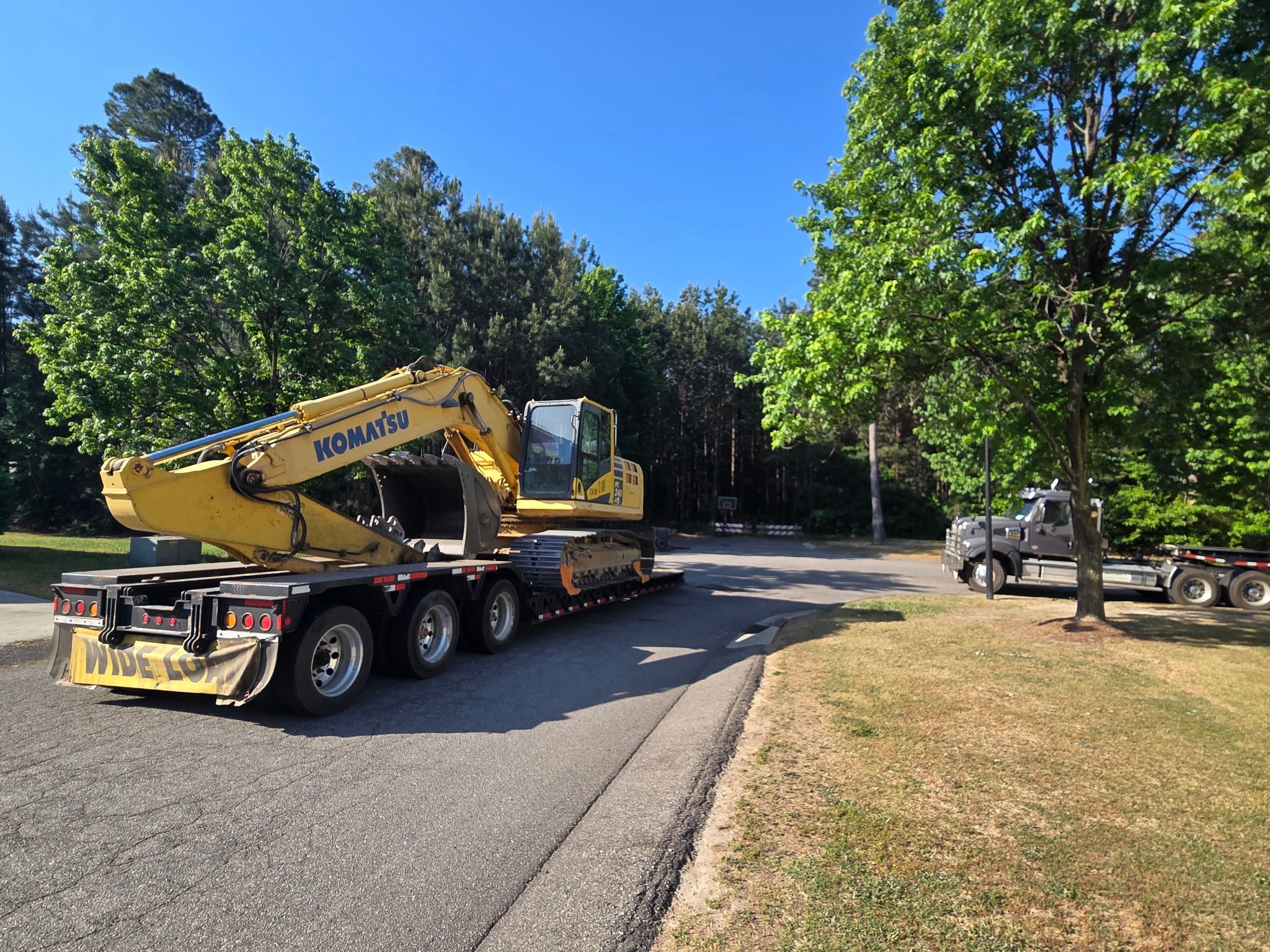
Purpose-built mulching heads on high-flow skid steers and 20 to 30 ton excavators changed the economics starting around the mid-2010s. One machine, one operator, no burn pile, no haul-off. The vegetation gets ground in place and left as a chip mat.
The marketing that came with it was seductive: cheaper, faster, no permits, better for the soil, no ugly piles. Every one of those claims is true in the right conditions. The problem is that "the right conditions" describes maybe half of a typical 40 acre Piedmont tract.
Where the mulching pitch breaks down
Production rate is not linear with acreage. In light underbrush and stems under four inches, a single mulcher can cover one to two acres a day. Put that same machine into a 40 year old mixed hardwood stand with eight inch and larger stems and you are looking at a quarter to half an acre a day. Forty acres of that is not a two week job. Price per acre quotes that were built on light material fall apart fast, which is why the good bids are walked and priced by zone, not by a blended per-acre number.
The stumps are still there. Mulching removes what is above grade. Root balls stay in the ground. That is fine for hunting lanes, firebreaks, view corridors, and pasture you will bushhog for years. It is not fine under a building pad, a road prism, a solar pile field, or anything a geotech is going to sign off on. Organic material and stumps under fill is a settlement problem, and you will pay twice: once to mulch it, again to grub it out.
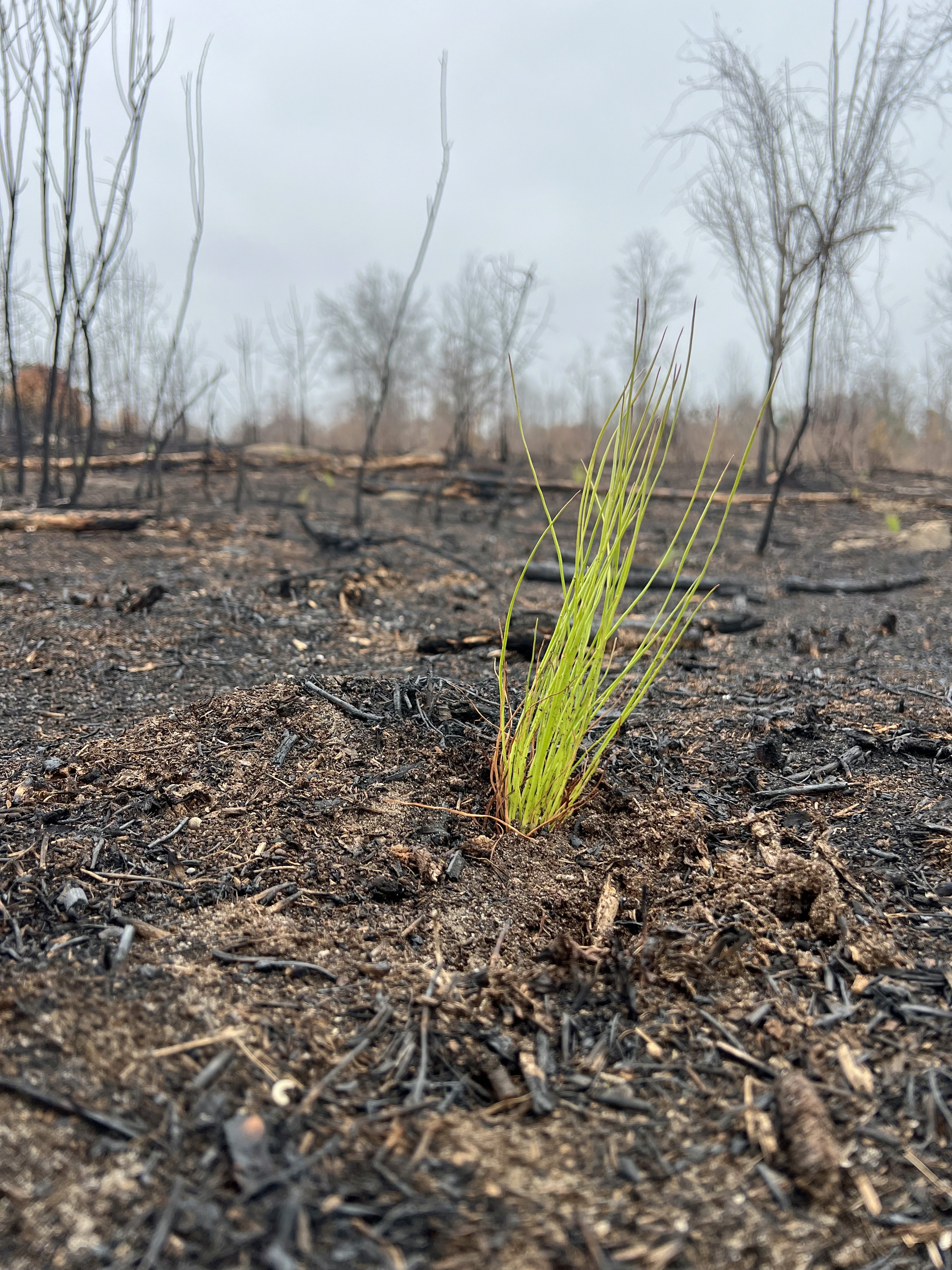
Regrowth is the second invoice. Sweetgum, privet, and tree of heaven do not die when you grind the top off. They sprout from the root collar and come back thicker, often with more stems than the original plant had. Mulching without a follow-up herbicide plan buys you about two growing seasons. That is the same trap we describe in our UVM work on utility rights of way: the cheapest first pass produces the most expensive fifth year.
And the big one: merchantable timber. If your 40 acres carries sawtimber or even good pulpwood, a mulching head converts that into chips. Species, stand age, access, and haul distance to the mill drive what that wood is worth, and those numbers are worth knowing before you commit to a method. Our breakdown of what actually drives standing timber prices in NC walks through the same factors a buyer runs.
What we do on a 40 acre tract now
The sequence, in order:
Walk it and zone it. Divide the 40 into merchantable stand, transition brush, and whatever has to be built on. Those three zones get three different machines. On most tracts the zones do not line up with the property lines or the survey, which is exactly why a blended per-acre bid is a guess.
Harvest first if the wood justifies it. Even a partial harvest on 15 of 40 acres can offset a meaningful share of the clearing cost, and it also opens the canopy so the mulcher is working in daylight instead of fighting a closed stand. Once the wood is ground up, that option is gone permanently. This is the piece landowners most often skip, and it is the one we spend the most time on with private landowners.
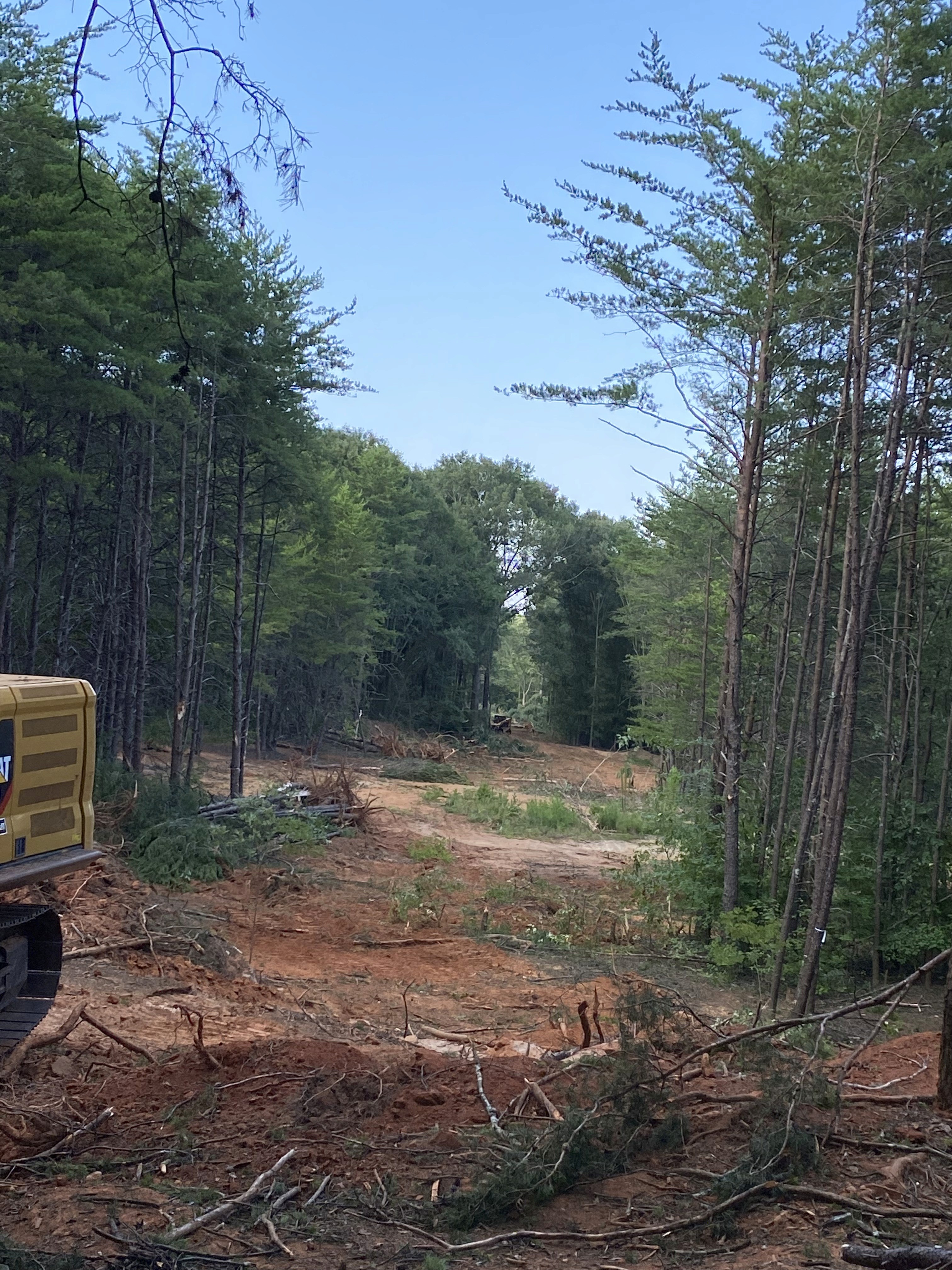
Mulch the low-value acreage. Brush, small stems, understory, buffers, and anything staying in a natural or recreational state. The chip mat also gives you a working surface on wet Piedmont clay in January, which is a real scheduling advantage.
Grub only what gets loaded. Pads, roads, ponds, laydown yards. Pulling stumps, hauling them off, and bringing fill back for the voids is the expensive end of any clearing bid. Buy it on the acreage that needs it and nowhere else.
Plan the erosion control before the dirt moves. Mulching that leaves the root mat and duff intact disturbs far less soil than grubbing, which matters for your erosion and sediment control obligations on a site this size. Once you start grubbing and grading over an acre, you are squarely in NCDEQ plan and NPDES territory. Sequence the work so you are not exposing 40 acres at once.
The short decision rule
Mulch if the end use is recreational, wildlife, pasture, buffer, or fuel reduction; if the stems are mostly under six inches; and if you have a follow-up treatment plan for regrowth.
Clear and grub if anything is getting built, filled, compacted, or driven on heavy; if the stumps interfere with the grade; or if the material is too large to grind economically.
Do both, in sequence if you have merchantable timber and a development footprint on the same 40, which describes most of the tracts we get called on.
The method is downstream of the end use. Decide what the land has to do in five years, then pick the machine, not the other way around. If you are sitting on 20 to 100 acres in central North Carolina and want someone to walk it and price it by zone rather than by a blended per-acre number, get in touch. We will tell you when mulching is the right call, and we will tell you when it is not.
On a 40 acre tract, forestry mulching and traditional land clearing are rarely an either/or decision, and picking one for the whole property is how landowners lose money. The honest answer: mulch the acreage where the stumps can stay, clear and grub only the acreage that has to carry something, and if there is merchantable pine or hardwood standing on that 40, sell it before either machine touches it. Mulching a stand of chip-n-saw loblolly turns a revenue line into a cost line in about three days.
That is not the pitch most mulching outfits lead with. It is the one we give, because we run both the mulchers and the logging crews and we get paid either way.
How 40 acre tracts used to get cleared in North Carolina
Fifteen years ago the sequence was simple and loud. A dozer with a root rake pushed everything into windrows or a burn pit, stumps and all. The material burned for a week, the ash got buried or hauled, and the dirt work started. It worked. It also produced a torn-up subsoil profile, a permit conversation with the county about open burning, and a bill that scaled with how many stumps you had to chase.
Nobody loved it. There was just nothing else that handled 40 acres of mixed pine and sweetgum at a price a landowner would sign.
What changed: the mulching head
Purpose-built mulching heads on high-flow skid steers and 20 to 30 ton excavators changed the economics starting around the mid-2010s. One machine, one operator, no burn pile, no haul-off. The vegetation gets ground in place and left as a chip mat.
The marketing that came with it was seductive: cheaper, faster, no permits, better for the soil, no ugly piles. Every one of those claims is true in the right conditions. The problem is that "the right conditions" describes maybe half of a typical 40 acre Piedmont tract.
Where the mulching pitch breaks down
Production rate is not linear with acreage. In light underbrush and stems under four inches, a single mulcher can cover one to two acres a day. Put that same machine into a 40 year old mixed hardwood stand with eight inch and larger stems and you are looking at a quarter to half an acre a day. Forty acres of that is not a two week job. Price per acre quotes that were built on light material fall apart fast, which is why the good bids are walked and priced by zone, not by a blended per-acre number.
The stumps are still there. Mulching removes what is above grade. Root balls stay in the ground. That is fine for hunting lanes, firebreaks, view corridors, and pasture you will bushhog for years. It is not fine under a building pad, a road prism, a solar pile field, or anything a geotech is going to sign off on. Organic material and stumps under fill is a settlement problem, and you will pay twice: once to mulch it, again to grub it out.
Regrowth is the second invoice. Sweetgum, privet, and tree of heaven do not die when you grind the top off. They sprout from the root collar and come back thicker, often with more stems than the original plant had. Mulching without a follow-up herbicide plan buys you about two growing seasons. That is the same trap we describe in our UVM work on utility rights of way: the cheapest first pass produces the most expensive fifth year.
And the big one: merchantable timber. If your 40 acres carries sawtimber or even good pulpwood, a mulching head converts that into chips. Species, stand age, access, and haul distance to the mill drive what that wood is worth, and those numbers are worth knowing before you commit to a method. Our breakdown of what actually drives standing timber prices in NC walks through the same factors a buyer runs.
What we do on a 40 acre tract now
The sequence, in order:
Walk it and zone it. Divide the 40 into merchantable stand, transition brush, and whatever has to be built on. Those three zones get three different machines. On most tracts the zones do not line up with the property lines or the survey, which is exactly why a blended per-acre bid is a guess.
Harvest first if the wood justifies it. Even a partial harvest on 15 of 40 acres can offset a meaningful share of the clearing cost, and it also opens the canopy so the mulcher is working in daylight instead of fighting a closed stand. Once the wood is ground up, that option is gone permanently. This is the piece landowners most often skip, and it is the one we spend the most time on with private landowners.
Mulch the low-value acreage. Brush, small stems, understory, buffers, and anything staying in a natural or recreational state. The chip mat also gives you a working surface on wet Piedmont clay in January, which is a real scheduling advantage.
Grub only what gets loaded. Pads, roads, ponds, laydown yards. Pulling stumps, hauling them off, and bringing fill back for the voids is the expensive end of any clearing bid. Buy it on the acreage that needs it and nowhere else.
Plan the erosion control before the dirt moves. Mulching that leaves the root mat and duff intact disturbs far less soil than grubbing, which matters for your erosion and sediment control obligations on a site this size. Once you start grubbing and grading over an acre, you are squarely in NCDEQ plan and NPDES territory. Sequence the work so you are not exposing 40 acres at once.
The short decision rule
Mulch if the end use is recreational, wildlife, pasture, buffer, or fuel reduction; if the stems are mostly under six inches; and if you have a follow-up treatment plan for regrowth.
Clear and grub if anything is getting built, filled, compacted, or driven on heavy; if the stumps interfere with the grade; or if the material is too large to grind economically.
Do both, in sequence if you have merchantable timber and a development footprint on the same 40, which describes most of the tracts we get called on.
The method is downstream of the end use. Decide what the land has to do in five years, then pick the machine, not the other way around. If you are sitting on 20 to 100 acres in central North Carolina and want someone to walk it and price it by zone rather than by a blended per-acre number, get in touch. We will tell you when mulching is the right call, and we will tell you when it is not.