2025-07-14T00:00:00.000Z
How to Prepare Land for Development or Construction: A Contractor's Step-by-Step Guide
A sequenced, contractor-tested guide to land preparation for development and construction, covering permitting, timber harvest, clearing, erosion controls, and rough grading across the Southeast.

The best way to prepare land for development or construction is to sequence the work in the right order: survey and permit first, clear and grub second, manage erosion and stormwater third, then handle earthwork, hauling, and rough grading before utilities go in. Skipping or reordering these steps is what turns a 90-day site prep window into a 6-month headache, and it is the single biggest reason developers blow their pre-construction budgets.
Here is the sequence we use on developer and general-contractor projects across North Carolina, Virginia, South Carolina, and Georgia, and what each step actually requires.
Step 1: Survey, soil testing, and permits
Before a single tree comes down, you need a boundary survey, a topographic survey, and a geotechnical report. The topo drives your cut-and-fill calculations. The geotech tells you whether you have sandy loam you can build on tomorrow or plastic clay that needs undercutting and structural fill.
Permits to line up in parallel:
Land-disturbance permit: required for any site over one acre in NC, and most jurisdictions want an approved erosion and sediment control plan attached.
Stormwater permit: triggered by impervious surface thresholds that vary by county and watershed.
Wetlands and stream buffers: a 404 permit through the Army Corps if you are touching jurisdictional waters, plus state riparian buffer rules.
Driveway or encroachment permit: NCDOT or the local authority, depending on the road class.
Why it matters: starting clearing without an approved E&S plan is the fastest way to draw a stop-work order. We walk through this in detail in our framework for large-scale site clearing in North Carolina.
Step 2: Timber harvest, then clearing and grubbing
If the parcel has merchantable timber, harvest it before you clear. Selling standing timber to a direct buyer can offset six figures of site prep cost on a wooded tract, money most developers leave on the table because they treat trees as debris instead of inventory. We buy standing timber directly through Timberline Forest Products, which means the same crew that cruises and harvests the timber rolls straight into clearing.
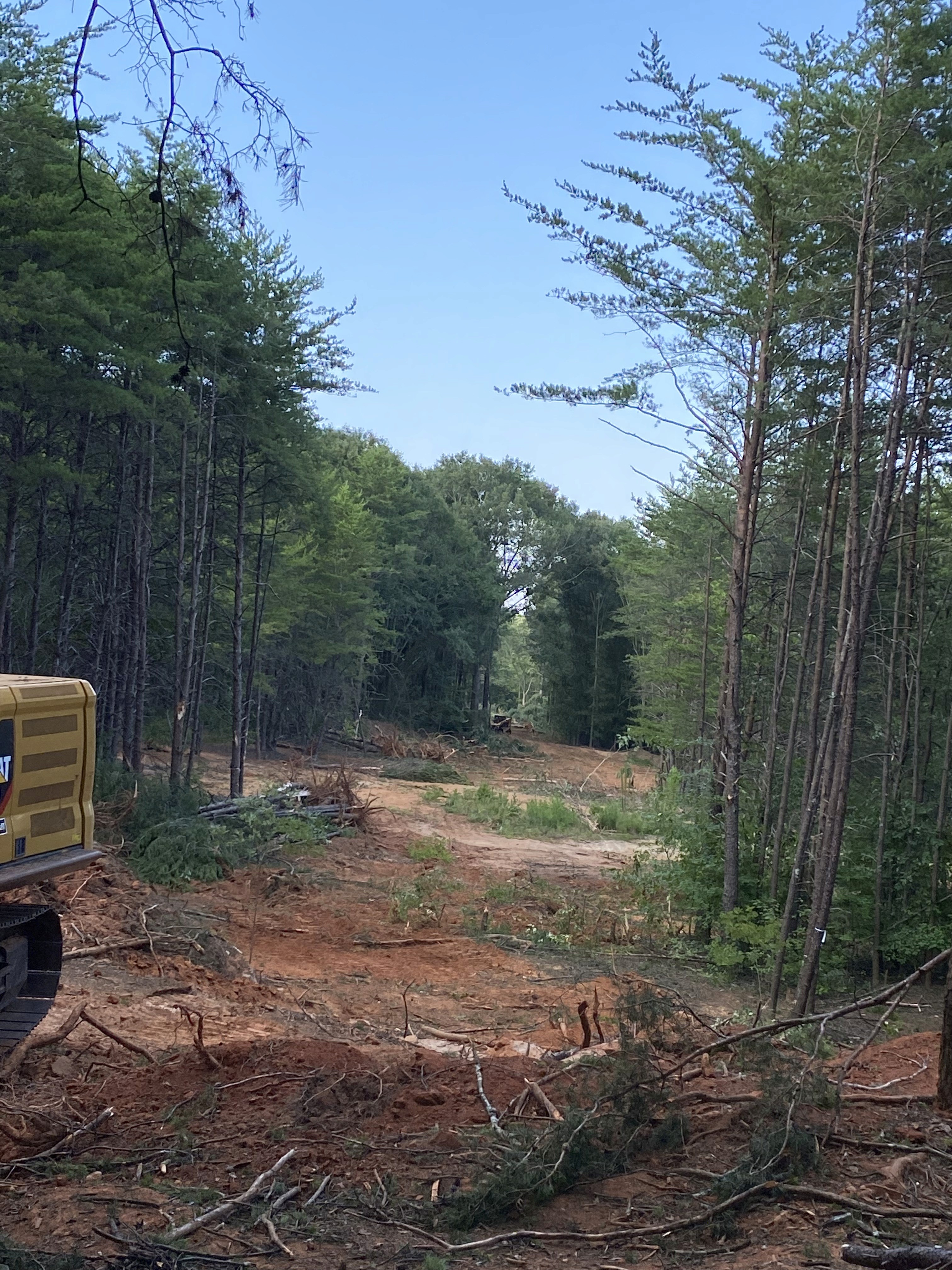
Clearing removes above-ground vegetation. Grubbing pulls stumps and root mats. For building pads and roadways, you grub. For green space or future phases, you can often leave stumps in place and save money.
Disposal options, in order of typical cost:
Chip and haul off: cleanest, highest cost.
Grind in place: mulch the material for erosion cover or future landscaping.
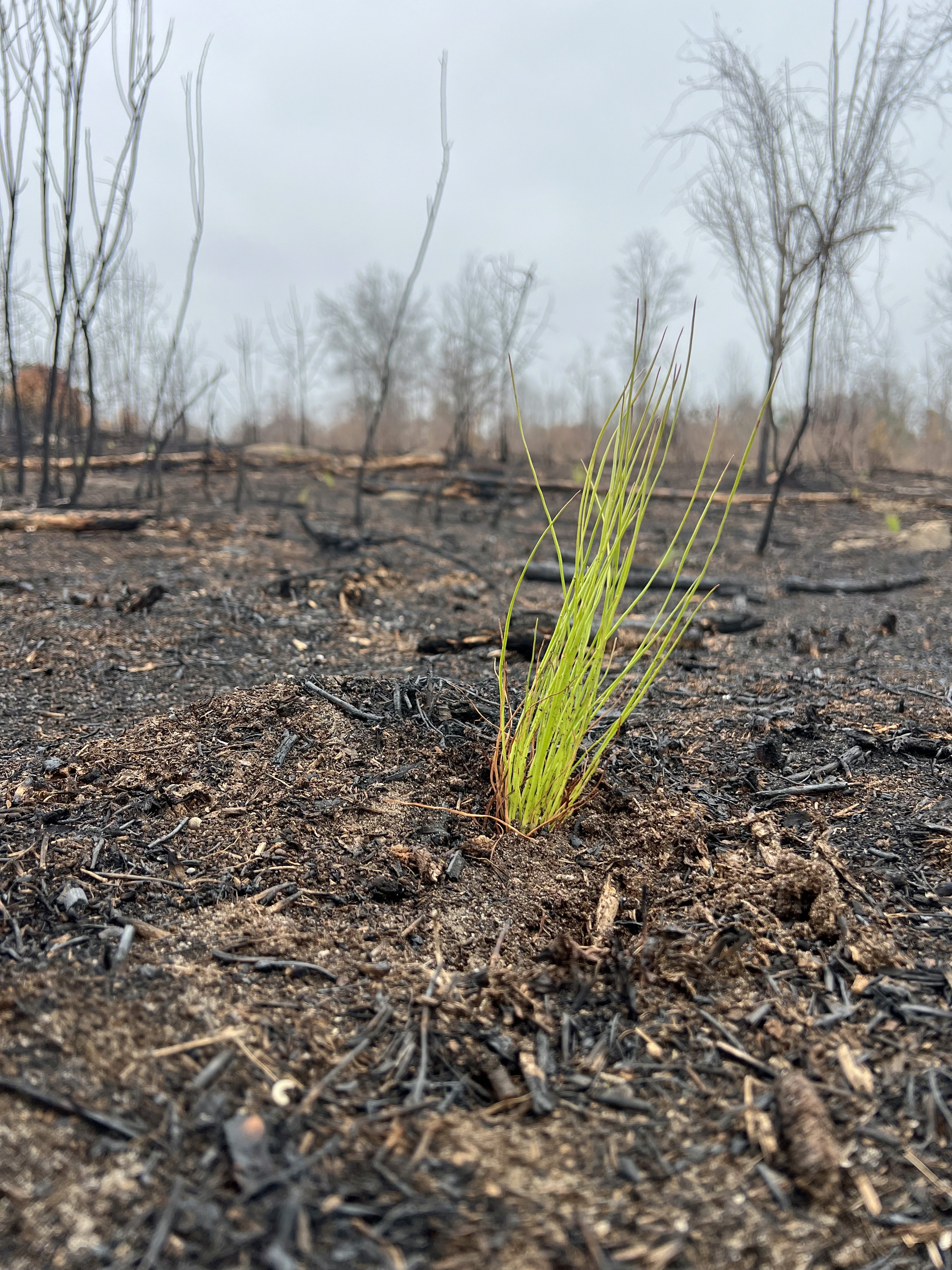
Burn pit: lowest cost where allowed, requires open-burn permits and a watchful crew.
Step 3: Install erosion and sediment controls
Silt fence, construction entrances, sediment basins, and inlet protection go in before mass grading, not after. NC's standards reference the state Erosion and Sediment Control Planning and Design Manual, and inspectors check. We cover the specifics, basin sizing, skimmer selection, basin cleanout intervals, in our erosion and sediment control guide for large NC sites.
Step 4: Mass grading, hauling, and rough grade
Now you cut, fill, and balance the site. The single biggest cost variable here is haul distance for excess material or import borrow. On a 50-acre commercial pad, a 10-mile haul versus an on-site balance can swing the budget by $200,000 or more.
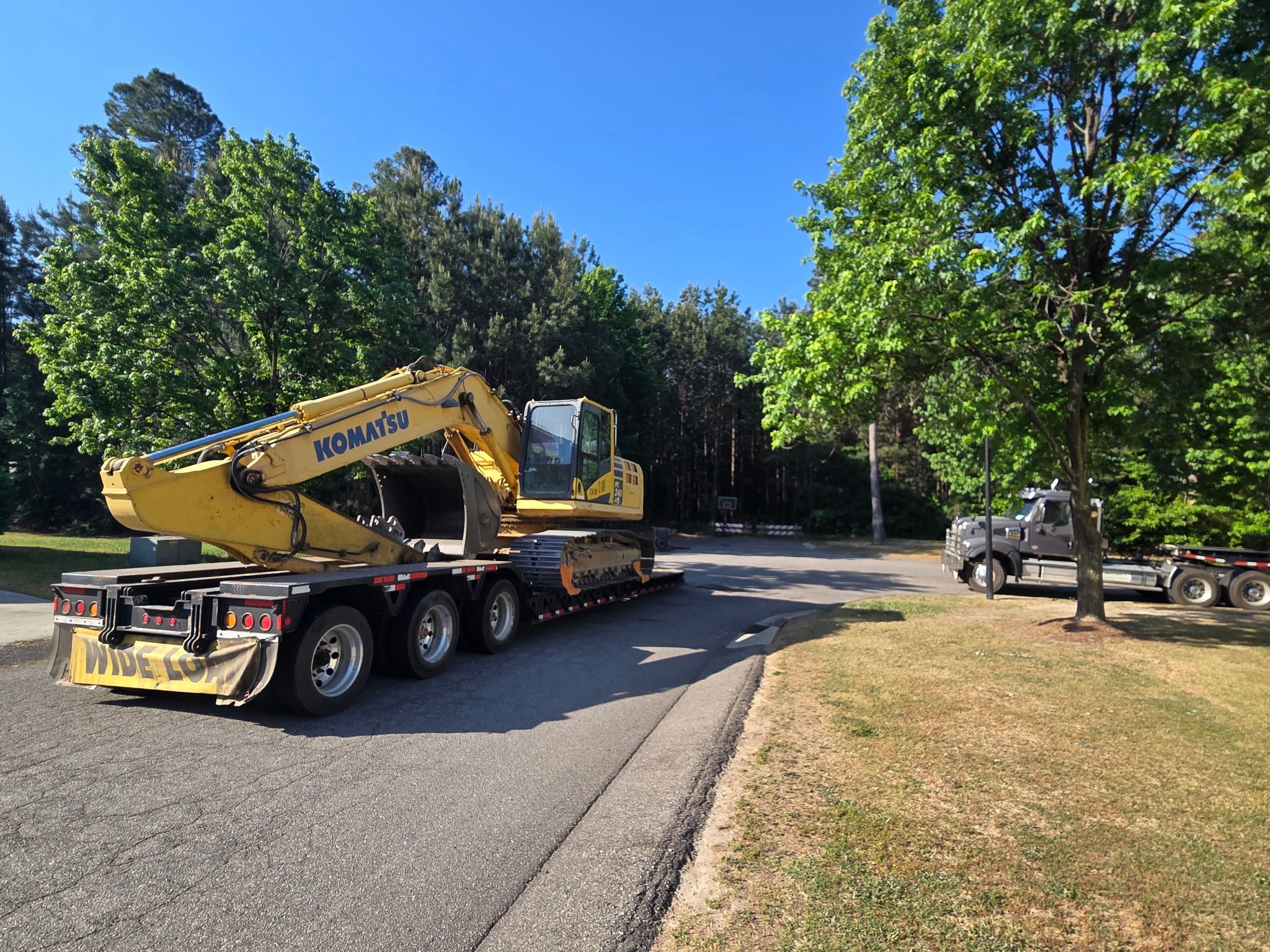
This is where having clearing, hauling, and heavy equipment under one roof matters. Subcontracting each piece separately means coordinating three schedules, three insurance certificates, and three change-order processes. Our contracting and heavy hauling divisions run on the same project plan, so when grading hits a wet spot we are not waiting two weeks for a hauler to free up lowboys.
Step 5: Stabilize and hand off to utilities
Once rough grade is signed off, you seed and stabilize disturbed areas not yet built on, maintain your E&S controls through the build, and turn the site over to the utility and foundation crews. Document everything: as-built topo, density reports on structural fill, photo logs of buried debris and removals. Lenders and future buyers will ask.
Realistic timelines
For a 25 to 100 acre wooded tract in the Southeast:
Survey, geotech, permitting: 8 to 16 weeks.
Timber harvest (if applicable): 2 to 6 weeks.
Clearing and grubbing: 3 to 8 weeks.
E&S install and mass grading: 6 to 16 weeks.
Run these in parallel where you can. Permitting almost always sits on the critical path.
If you are scoping a project and want a single partner who can survey the timber, clear the site, haul the material, and hand you a buildable pad, that is the model we built Timberline around. Get a project estimate and we will walk the site with you.
The best way to prepare land for development or construction is to sequence the work in the right order: survey and permit first, clear and grub second, manage erosion and stormwater third, then handle earthwork, hauling, and rough grading before utilities go in. Skipping or reordering these steps is what turns a 90-day site prep window into a 6-month headache, and it is the single biggest reason developers blow their pre-construction budgets.
Here is the sequence we use on developer and general-contractor projects across North Carolina, Virginia, South Carolina, and Georgia, and what each step actually requires.
Step 1: Survey, soil testing, and permits
Before a single tree comes down, you need a boundary survey, a topographic survey, and a geotechnical report. The topo drives your cut-and-fill calculations. The geotech tells you whether you have sandy loam you can build on tomorrow or plastic clay that needs undercutting and structural fill.
Permits to line up in parallel:
Land-disturbance permit: required for any site over one acre in NC, and most jurisdictions want an approved erosion and sediment control plan attached.
Stormwater permit: triggered by impervious surface thresholds that vary by county and watershed.
Wetlands and stream buffers: a 404 permit through the Army Corps if you are touching jurisdictional waters, plus state riparian buffer rules.
Driveway or encroachment permit: NCDOT or the local authority, depending on the road class.
Why it matters: starting clearing without an approved E&S plan is the fastest way to draw a stop-work order. We walk through this in detail in our framework for large-scale site clearing in North Carolina.
Step 2: Timber harvest, then clearing and grubbing
If the parcel has merchantable timber, harvest it before you clear. Selling standing timber to a direct buyer can offset six figures of site prep cost on a wooded tract, money most developers leave on the table because they treat trees as debris instead of inventory. We buy standing timber directly through Timberline Forest Products, which means the same crew that cruises and harvests the timber rolls straight into clearing.
Clearing removes above-ground vegetation. Grubbing pulls stumps and root mats. For building pads and roadways, you grub. For green space or future phases, you can often leave stumps in place and save money.
Disposal options, in order of typical cost:
Chip and haul off: cleanest, highest cost.
Grind in place: mulch the material for erosion cover or future landscaping.
Burn pit: lowest cost where allowed, requires open-burn permits and a watchful crew.
Step 3: Install erosion and sediment controls
Silt fence, construction entrances, sediment basins, and inlet protection go in before mass grading, not after. NC's standards reference the state Erosion and Sediment Control Planning and Design Manual, and inspectors check. We cover the specifics, basin sizing, skimmer selection, basin cleanout intervals, in our erosion and sediment control guide for large NC sites.
Step 4: Mass grading, hauling, and rough grade
Now you cut, fill, and balance the site. The single biggest cost variable here is haul distance for excess material or import borrow. On a 50-acre commercial pad, a 10-mile haul versus an on-site balance can swing the budget by $200,000 or more.
This is where having clearing, hauling, and heavy equipment under one roof matters. Subcontracting each piece separately means coordinating three schedules, three insurance certificates, and three change-order processes. Our contracting and heavy hauling divisions run on the same project plan, so when grading hits a wet spot we are not waiting two weeks for a hauler to free up lowboys.
Step 5: Stabilize and hand off to utilities
Once rough grade is signed off, you seed and stabilize disturbed areas not yet built on, maintain your E&S controls through the build, and turn the site over to the utility and foundation crews. Document everything: as-built topo, density reports on structural fill, photo logs of buried debris and removals. Lenders and future buyers will ask.
Realistic timelines
For a 25 to 100 acre wooded tract in the Southeast:
Survey, geotech, permitting: 8 to 16 weeks.
Timber harvest (if applicable): 2 to 6 weeks.
Clearing and grubbing: 3 to 8 weeks.
E&S install and mass grading: 6 to 16 weeks.
Run these in parallel where you can. Permitting almost always sits on the critical path.
If you are scoping a project and want a single partner who can survey the timber, clear the site, haul the material, and hand you a buildable pad, that is the model we built Timberline around. Get a project estimate and we will walk the site with you.