2025-07-14T00:00:00.000Z
One Crew, One Invoice: A 140-Acre Clearing and Hauling Project in Rural North Carolina
A real-world look at how Timberline Forestry managed timber harvest, land clearing, pad grading, and 18,000 cubic yards of haul-off on a single 140-acre rural property in eastern North Carolina, without a second contractor.

One Crew, One Invoice: How a 140-Acre Clearing and Hauling Job Got Done Without a Second Contractor
Short answer: on a large rural property, you can absolutely hire one company to handle both the clearing and the dirt hauling, and in most cases you should. Splitting the work between a land-clearing contractor and a separate trucking outfit creates seams where schedules slip, blame gets traded, and dirt sits in piles longer than it should. The story below is a composite of a real Timberline project profile in eastern North Carolina, told to show what a single-crew job actually looks like from walkover to final grade.
The situation: 140 acres, a tight window, and a nervous owner
The client owned 140 acres outside Smithfield, mixed loblolly pine and hardwood bottom, that he wanted converted to pasture and a 12-acre building pad for future ag structures. The land had not been touched in roughly 30 years. The complication was timing. He needed the pad rough-graded by the end of the dry season so his own contractor could pour footings, and he needed roughly 18,000 cubic yards of surplus soil hauled off site to a neighbor's low field about four miles away.
He had two bids in hand before he called us. One was from a clearing outfit that stopped at stump grinding and told him to "find a trucker." The other was from a dirt hauler who would not touch a standing tree. The gap between them was going to cost him about three weeks of idle time and a coordination headache he did not want.
What was tried: an integrated scope under one contract
Rather than stitching two contractors together, the whole job was written as a single scope. That matters, because the sequencing on a project like this is where money is won or lost. Here is how the work was staged:
Timber cruise and merchantable harvest first. A forest management walkover flagged about 62 acres of sawtimber and pulpwood worth harvesting before any clearing began. That timber sale offset a meaningful share of the clearing cost. A separate contractor would not have caught that value; a clearing crew would have mulched it.
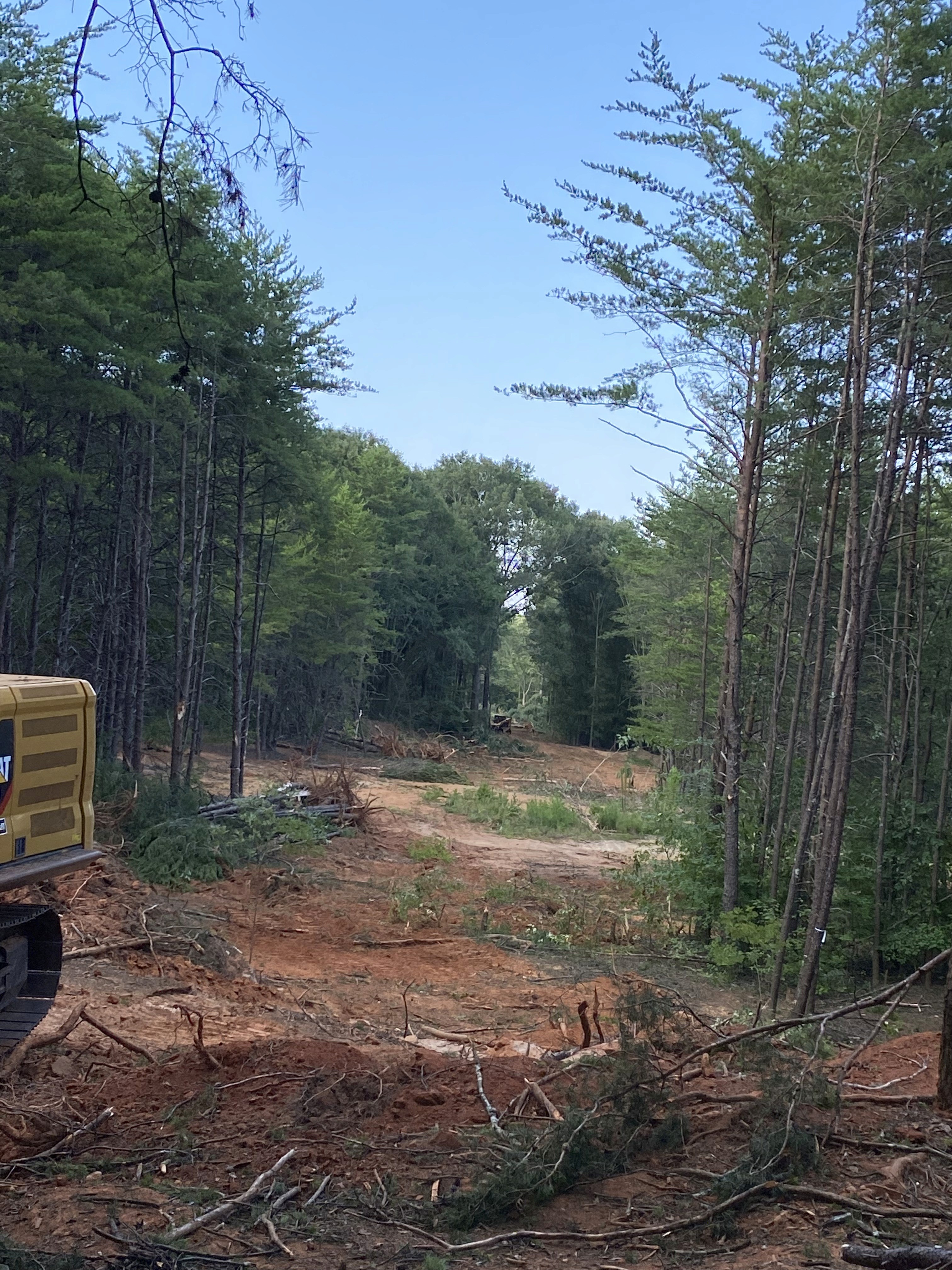
Mulching and stump removal on the pasture acres. The remaining acreage was mulched in place, with stumps pulled and windrowed for burning under a permitted prescribed burn.
Cut-and-fill on the 12-acre pad. The pad required a two-foot cut on the high side and matching fill on the low side. Grade stakes went in before the dozers moved.
Haul-off of surplus soil. The heavy hauling division moved the excess dirt to the neighbor's field with the same fleet that had been used to move equipment onto site. No third-party trucks, no waiting on dispatchers.
Erosion control and seeding. Silt fence, check dams, and a temporary cover crop went in before the crew demobilized.
The whole scope sat under one project manager, one safety plan, and one insurance certificate.
What happened: sequencing that a two-contractor split cannot match
The single-crew model paid off in three concrete ways.
First, the timber revenue landed before the clearing invoice was due, so the owner's out-of-pocket cost dropped by roughly a third. That only works when the same company can buy your standing timber and also do the clearing; otherwise, you are negotiating two separate transactions on two separate timelines.
Second, when the pad excavation hit a wetter clay lens than the soil report suggested, the crew shifted the haul trucks to a different borrow path the same afternoon. With a split contractor arrangement, that call would have meant a change order, a phone tree, and probably a lost day.
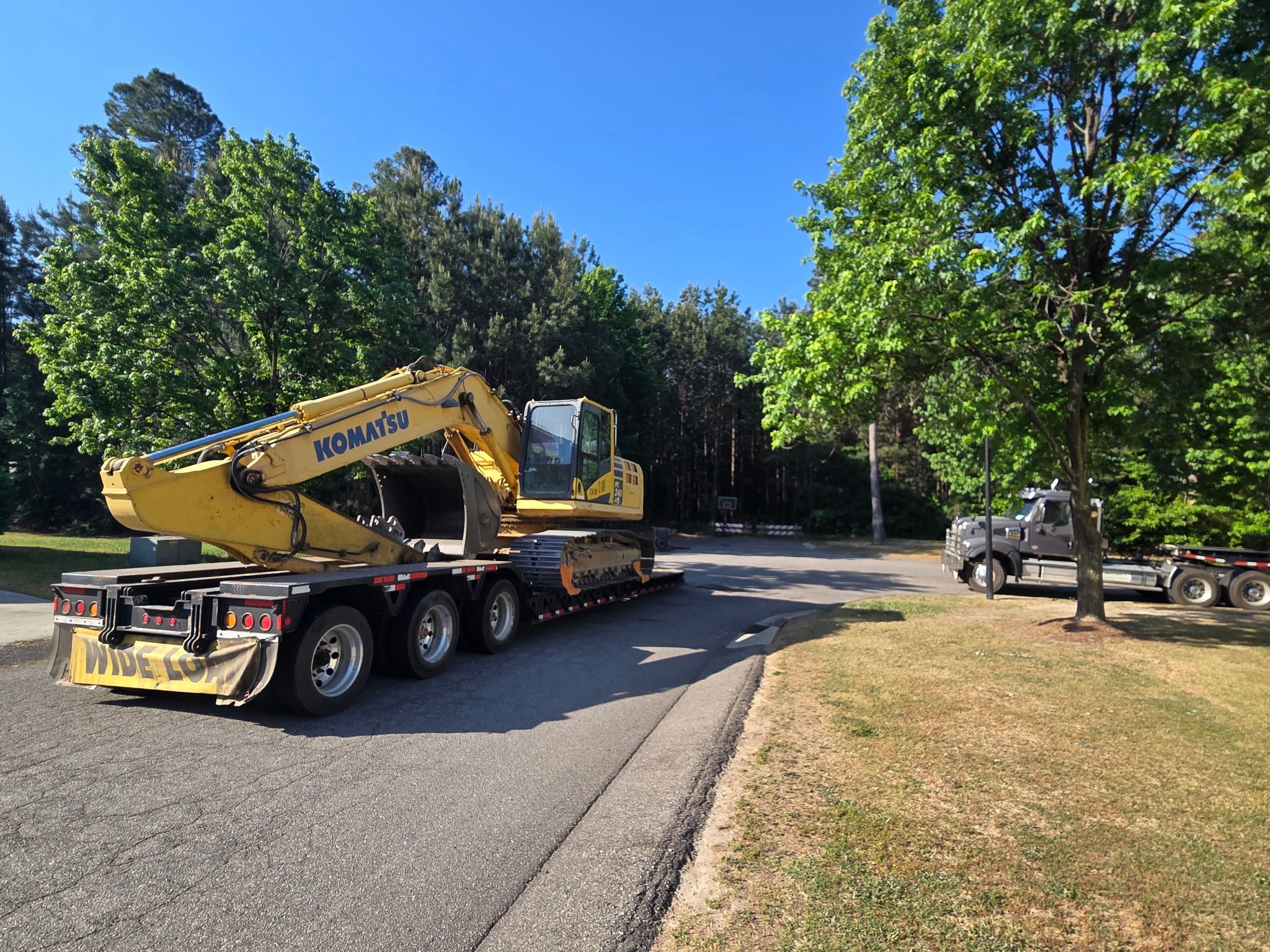
Third, demobilization happened once. Equipment came off site on the same lowboys that had brought it in. No second mobilization fee for a hauling company that had never seen the property.
The result: 11 weeks, on budget, pad ready for footings
The job wrapped in 11 weeks against a 14-week schedule. Final pad elevation was within a tenth of a foot of the survey target. The 18,000 yards of surplus soil landed exactly where the neighbor wanted it, saving him a fill purchase he had been quietly dreading. Two burn piles were disposed of under a valid NCFS permit, and the pasture acres went into a fescue-clover mix in the fall.
The reusable takeaway
If your project involves standing timber, clearing, earthwork, and haul-off on the same property, one contractor with all four capabilities in-house will almost always beat two specialists on cost, schedule, and risk. The exceptions are narrow: a very small parcel, or a job where the dirt stays on site and no hauling is needed. Anything above roughly 20 acres with off-site haul volume in the thousands of yards, look for a single partner.
Two questions to ask any bidder before you sign:
Do you own the trucks that will haul the dirt, or are you brokering that work?
Does the same project manager oversee the clearing crew and the hauling crew?
If the answer to either is no, you have a two-contractor job dressed up as one.
Timberline runs contracting and heavy hauling out of the same yard in Angier, NC, with the same crews and the same dispatcher. If you have a rural site that needs both, tell us about the project and we will walk it with you.
One Crew, One Invoice: How a 140-Acre Clearing and Hauling Job Got Done Without a Second Contractor
Short answer: on a large rural property, you can absolutely hire one company to handle both the clearing and the dirt hauling, and in most cases you should. Splitting the work between a land-clearing contractor and a separate trucking outfit creates seams where schedules slip, blame gets traded, and dirt sits in piles longer than it should. The story below is a composite of a real Timberline project profile in eastern North Carolina, told to show what a single-crew job actually looks like from walkover to final grade.
The situation: 140 acres, a tight window, and a nervous owner
The client owned 140 acres outside Smithfield, mixed loblolly pine and hardwood bottom, that he wanted converted to pasture and a 12-acre building pad for future ag structures. The land had not been touched in roughly 30 years. The complication was timing. He needed the pad rough-graded by the end of the dry season so his own contractor could pour footings, and he needed roughly 18,000 cubic yards of surplus soil hauled off site to a neighbor's low field about four miles away.
He had two bids in hand before he called us. One was from a clearing outfit that stopped at stump grinding and told him to "find a trucker." The other was from a dirt hauler who would not touch a standing tree. The gap between them was going to cost him about three weeks of idle time and a coordination headache he did not want.
What was tried: an integrated scope under one contract
Rather than stitching two contractors together, the whole job was written as a single scope. That matters, because the sequencing on a project like this is where money is won or lost. Here is how the work was staged:
Timber cruise and merchantable harvest first. A forest management walkover flagged about 62 acres of sawtimber and pulpwood worth harvesting before any clearing began. That timber sale offset a meaningful share of the clearing cost. A separate contractor would not have caught that value; a clearing crew would have mulched it.
Mulching and stump removal on the pasture acres. The remaining acreage was mulched in place, with stumps pulled and windrowed for burning under a permitted prescribed burn.
Cut-and-fill on the 12-acre pad. The pad required a two-foot cut on the high side and matching fill on the low side. Grade stakes went in before the dozers moved.
Haul-off of surplus soil. The heavy hauling division moved the excess dirt to the neighbor's field with the same fleet that had been used to move equipment onto site. No third-party trucks, no waiting on dispatchers.
Erosion control and seeding. Silt fence, check dams, and a temporary cover crop went in before the crew demobilized.
The whole scope sat under one project manager, one safety plan, and one insurance certificate.
What happened: sequencing that a two-contractor split cannot match
The single-crew model paid off in three concrete ways.
First, the timber revenue landed before the clearing invoice was due, so the owner's out-of-pocket cost dropped by roughly a third. That only works when the same company can buy your standing timber and also do the clearing; otherwise, you are negotiating two separate transactions on two separate timelines.
Second, when the pad excavation hit a wetter clay lens than the soil report suggested, the crew shifted the haul trucks to a different borrow path the same afternoon. With a split contractor arrangement, that call would have meant a change order, a phone tree, and probably a lost day.
Third, demobilization happened once. Equipment came off site on the same lowboys that had brought it in. No second mobilization fee for a hauling company that had never seen the property.
The result: 11 weeks, on budget, pad ready for footings
The job wrapped in 11 weeks against a 14-week schedule. Final pad elevation was within a tenth of a foot of the survey target. The 18,000 yards of surplus soil landed exactly where the neighbor wanted it, saving him a fill purchase he had been quietly dreading. Two burn piles were disposed of under a valid NCFS permit, and the pasture acres went into a fescue-clover mix in the fall.
The reusable takeaway
If your project involves standing timber, clearing, earthwork, and haul-off on the same property, one contractor with all four capabilities in-house will almost always beat two specialists on cost, schedule, and risk. The exceptions are narrow: a very small parcel, or a job where the dirt stays on site and no hauling is needed. Anything above roughly 20 acres with off-site haul volume in the thousands of yards, look for a single partner.
Two questions to ask any bidder before you sign:
Do you own the trucks that will haul the dirt, or are you brokering that work?
Does the same project manager oversee the clearing crew and the hauling crew?
If the answer to either is no, you have a two-contractor job dressed up as one.
Timberline runs contracting and heavy hauling out of the same yard in Angier, NC, with the same crews and the same dispatcher. If you have a rural site that needs both, tell us about the project and we will walk it with you.