2025-07-14T00:00:00.000Z
Prescribed Burning vs. Mechanical Thinning: Which Improves Forest Health More?
Prescribed burning and mechanical thinning each improve forest health in different ways. Learn how to decide which treatment your Southeastern pine stand needs right now, and why most well-managed stands eventually use both.

Prescribed burning and mechanical thinning both reduce competition, lower wildfire risk, and improve the long-term health of a stand, but they work through completely different mechanisms. Burning recycles nutrients and controls understory vegetation with low-intensity fire. Thinning physically removes selected trees with equipment to give the strongest stems more room, light, and water. Most well-managed Southeastern pine stands eventually need both, just not at the same time and not for the same reasons.
Here is how to decide which one your land needs right now.
What each treatment actually does
Prescribed burning
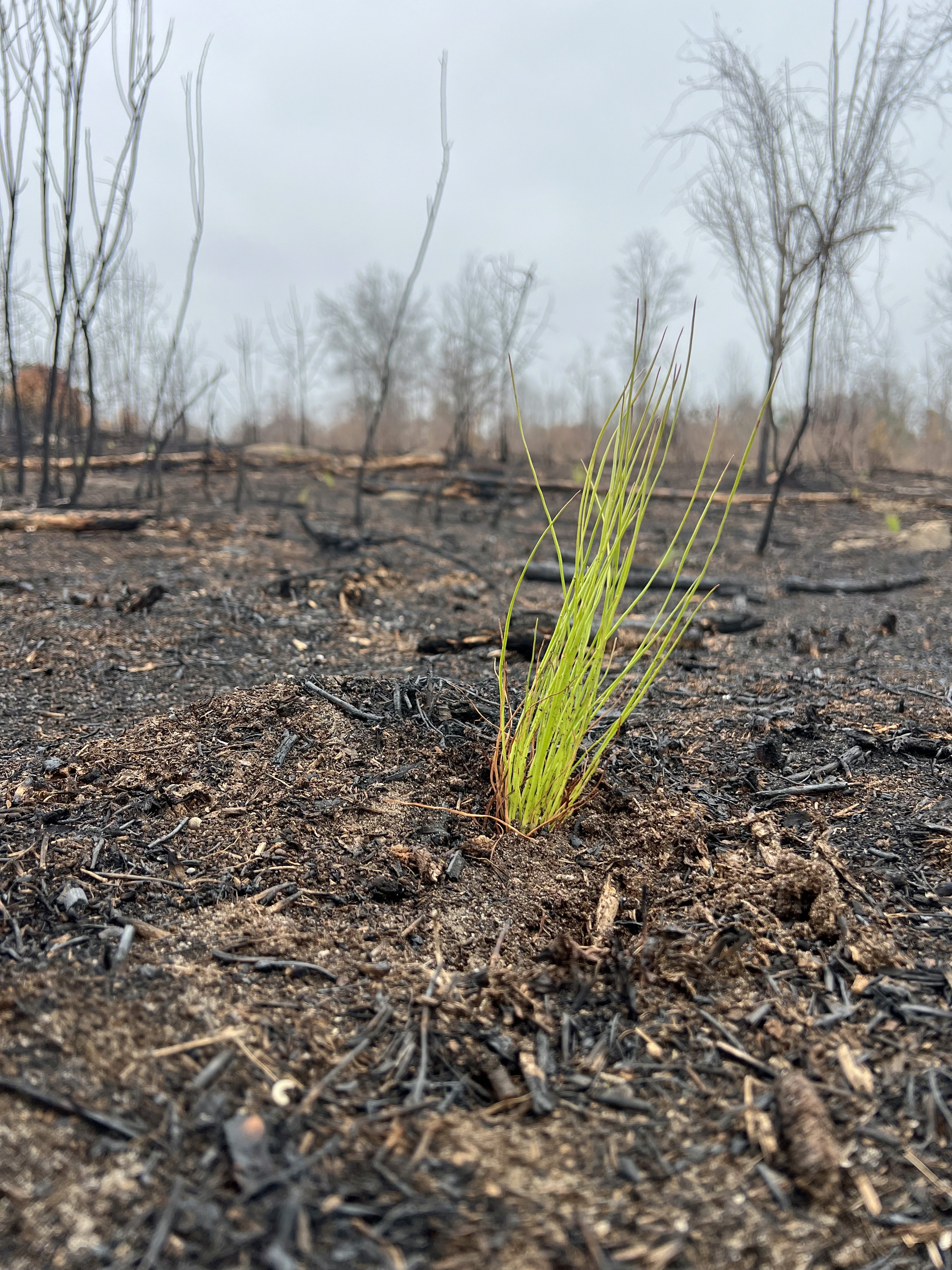
A prescribed burn is a planned, controlled low-intensity fire applied under a specific weather window, with crew, equipment, and firebreaks in place. In a Southeastern pine stand it is typically run as a winter or early-spring backing fire that consumes leaf litter, kills hardwood saplings under about an inch in diameter, and releases nutrients back into the soil. It does not, in most cases, kill the overstory pines. Longleaf and loblolly are adapted to live with fire.
What it accomplishes:
Fuel reduction. Removes years of pine straw, branches, and brush that would otherwise feed a wildfire.
Hardwood control. Sets back sweetgum, red maple, and other competitors that crowd out pine regeneration.
Wildlife habitat. Opens the understory for quail, turkey, and deer browse.
Disease and pest suppression. Knocks back tick populations and certain soil-borne pathogens that thrive in heavy duff.
Mechanical thinning
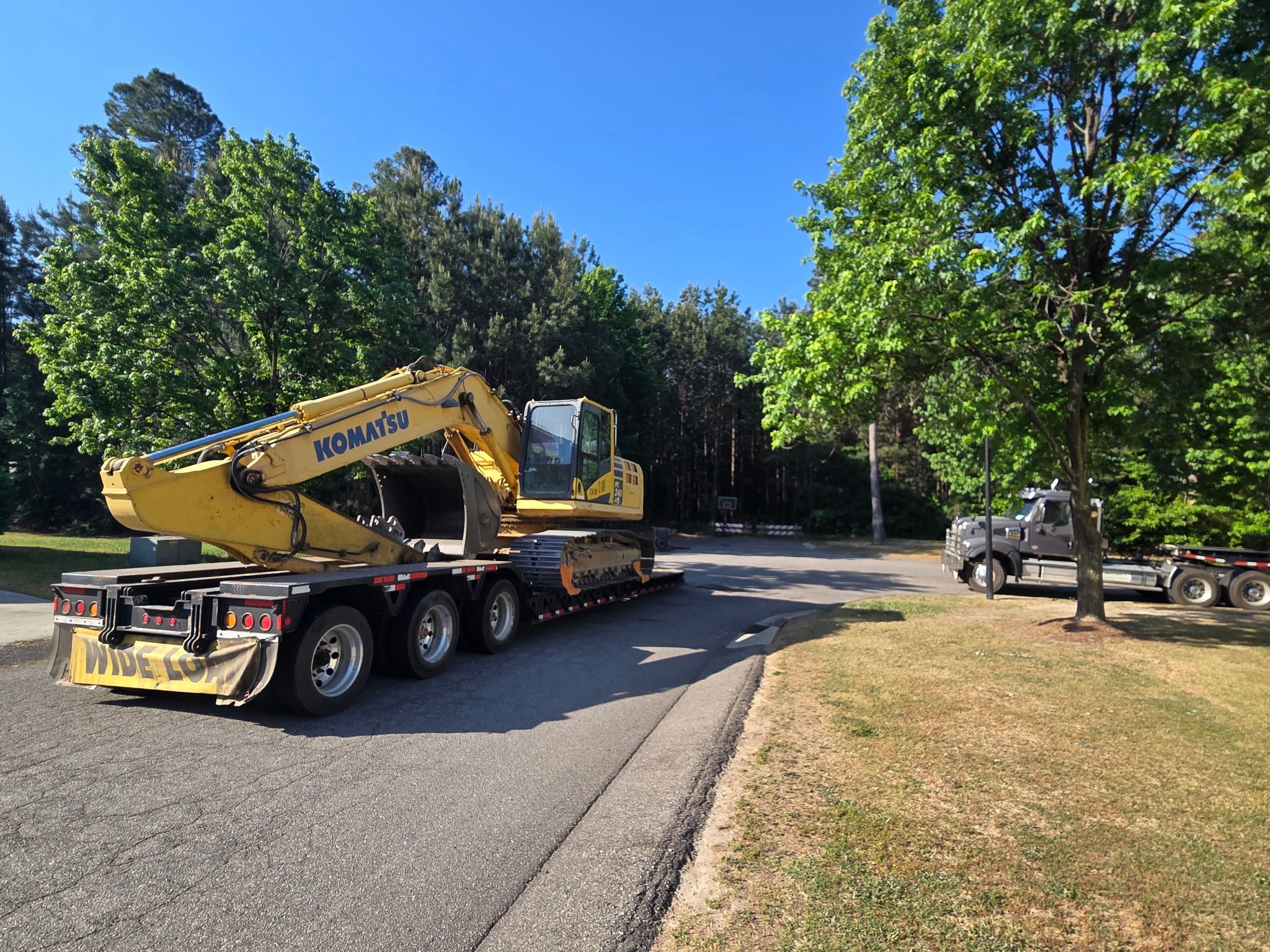
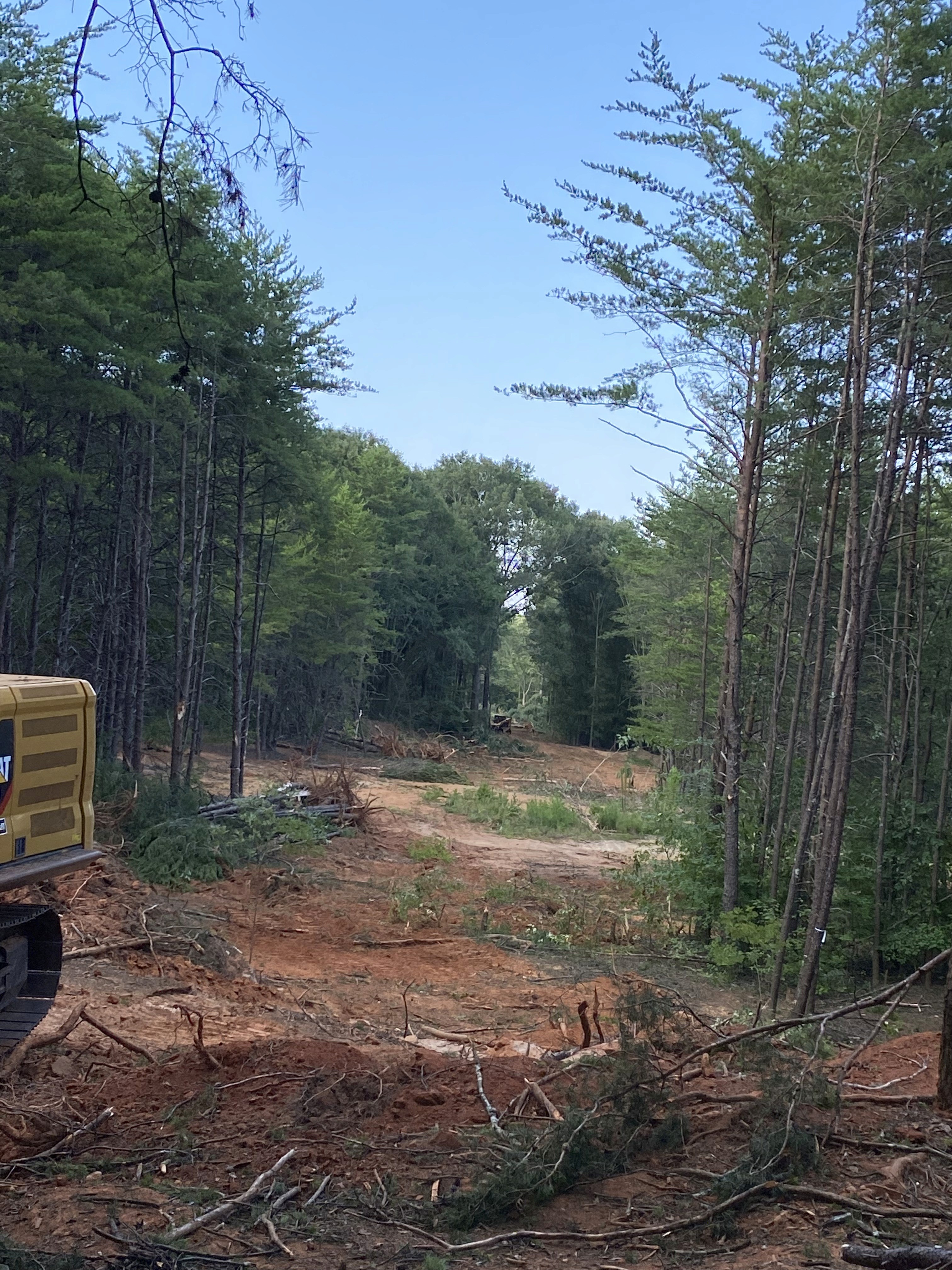
Mechanical thinning sends crews and machines into the stand to cut and remove selected trees, usually the smaller, suppressed, or poorly formed ones. In a planted pine stand the first thinning typically happens between ages 12 and 18, when canopies have closed and diameter growth is slowing. The merchantable wood goes to a mill as pulpwood or chip-n-saw.
What it accomplishes:
Released growth. Remaining trees expand crowns and add diameter faster.
Revenue. Unlike a burn, thinning produces a check.
Stand structure. Lets you keep the best-formed, highest-value stems for the final harvest.
Storm and beetle resilience. Less crowded stands handle wind and southern pine beetle pressure better.
Side-by-side, where they differ
Cost and cash flow: A burn costs money out of pocket. A thinning generates timber revenue. For a landowner watching budget, that difference alone often drives the decision.
Stand age: Burning works in established stands with bark thick enough to tolerate fire, generally after age 8 to 10 in loblolly, earlier in longleaf. Thinning waits until trees reach merchantable size.
What it removes: Burning targets the understory and ground fuels. Thinning targets the overstory.
Frequency: Prescribed burns are repeated on a 2 to 4 year rotation. Mechanical thinning happens 1 to 3 times across a rotation.
Site impact: Burns leave the soil largely undisturbed. Thinning produces ruts, skid trails, and slash that need planning around wet weather and BMPs.
Regulatory load: Burning requires permits, smoke management plans, and tight weather windows. Thinning requires harvest planning, contracts, and BMP compliance, but no burn authorization.
Pick burning if...
Your stand is already at the right density but the understory is taking over. You see waist-high hardwood brush, heavy needle cast, and limited wildlife use. You want low-cost, recurring maintenance and you can tolerate a smoke day. Burning is also the right call after a thinning, once slash has cured, to clean up the residual fuel load.
Pick mechanical thinning if...
Your stand is overstocked. Crowns are touching, lower branches are dying back, diameter growth has stalled, and you have not yet captured any revenue from the investment. Thinning is also the move when you are positioning a stand for a future clearcut and want the remaining trees to put on sawtimber-grade value.
The honest answer: most stands need both
A healthy Southeastern pine stand managed for timber and habitat typically follows a rhythm: establish, first thin around age 14, burn on a 3 year cycle starting a season or two after the thin, second thin around age 22, and final harvest in the late 20s or 30s. Burning and thinning are not competing tools. They are sequenced ones.
That sequencing only works if someone is writing it down and tracking it. A written forest management plan is what separates a stand that compounds in value from one that drifts.
At Timberline, we run both sides of this work in-house: prescribed fire crews, thinning crews, and the equipment to move wood off the tract. Because we also buy standing timber directly, a thinning can be planned and executed without juggling separate contractors. If you are weighing your next move on a tract in North Carolina, Virginia, South Carolina, or Georgia, tell us about the property and we will walk it with you.
Prescribed burning and mechanical thinning both reduce competition, lower wildfire risk, and improve the long-term health of a stand, but they work through completely different mechanisms. Burning recycles nutrients and controls understory vegetation with low-intensity fire. Thinning physically removes selected trees with equipment to give the strongest stems more room, light, and water. Most well-managed Southeastern pine stands eventually need both, just not at the same time and not for the same reasons.
Here is how to decide which one your land needs right now.
What each treatment actually does
Prescribed burning
A prescribed burn is a planned, controlled low-intensity fire applied under a specific weather window, with crew, equipment, and firebreaks in place. In a Southeastern pine stand it is typically run as a winter or early-spring backing fire that consumes leaf litter, kills hardwood saplings under about an inch in diameter, and releases nutrients back into the soil. It does not, in most cases, kill the overstory pines. Longleaf and loblolly are adapted to live with fire.
What it accomplishes:
Fuel reduction. Removes years of pine straw, branches, and brush that would otherwise feed a wildfire.
Hardwood control. Sets back sweetgum, red maple, and other competitors that crowd out pine regeneration.
Wildlife habitat. Opens the understory for quail, turkey, and deer browse.
Disease and pest suppression. Knocks back tick populations and certain soil-borne pathogens that thrive in heavy duff.
Mechanical thinning
Mechanical thinning sends crews and machines into the stand to cut and remove selected trees, usually the smaller, suppressed, or poorly formed ones. In a planted pine stand the first thinning typically happens between ages 12 and 18, when canopies have closed and diameter growth is slowing. The merchantable wood goes to a mill as pulpwood or chip-n-saw.
What it accomplishes:
Released growth. Remaining trees expand crowns and add diameter faster.
Revenue. Unlike a burn, thinning produces a check.
Stand structure. Lets you keep the best-formed, highest-value stems for the final harvest.
Storm and beetle resilience. Less crowded stands handle wind and southern pine beetle pressure better.
Side-by-side, where they differ
Cost and cash flow: A burn costs money out of pocket. A thinning generates timber revenue. For a landowner watching budget, that difference alone often drives the decision.
Stand age: Burning works in established stands with bark thick enough to tolerate fire, generally after age 8 to 10 in loblolly, earlier in longleaf. Thinning waits until trees reach merchantable size.
What it removes: Burning targets the understory and ground fuels. Thinning targets the overstory.
Frequency: Prescribed burns are repeated on a 2 to 4 year rotation. Mechanical thinning happens 1 to 3 times across a rotation.
Site impact: Burns leave the soil largely undisturbed. Thinning produces ruts, skid trails, and slash that need planning around wet weather and BMPs.
Regulatory load: Burning requires permits, smoke management plans, and tight weather windows. Thinning requires harvest planning, contracts, and BMP compliance, but no burn authorization.
Pick burning if...
Your stand is already at the right density but the understory is taking over. You see waist-high hardwood brush, heavy needle cast, and limited wildlife use. You want low-cost, recurring maintenance and you can tolerate a smoke day. Burning is also the right call after a thinning, once slash has cured, to clean up the residual fuel load.
Pick mechanical thinning if...
Your stand is overstocked. Crowns are touching, lower branches are dying back, diameter growth has stalled, and you have not yet captured any revenue from the investment. Thinning is also the move when you are positioning a stand for a future clearcut and want the remaining trees to put on sawtimber-grade value.
The honest answer: most stands need both
A healthy Southeastern pine stand managed for timber and habitat typically follows a rhythm: establish, first thin around age 14, burn on a 3 year cycle starting a season or two after the thin, second thin around age 22, and final harvest in the late 20s or 30s. Burning and thinning are not competing tools. They are sequenced ones.
That sequencing only works if someone is writing it down and tracking it. A written forest management plan is what separates a stand that compounds in value from one that drifts.
At Timberline, we run both sides of this work in-house: prescribed fire crews, thinning crews, and the equipment to move wood off the tract. Because we also buy standing timber directly, a thinning can be planned and executed without juggling separate contractors. If you are weighing your next move on a tract in North Carolina, Virginia, South Carolina, or Georgia, tell us about the property and we will walk it with you.