2025-07-14T00:00:00.000Z
Site Prep Mistakes That Stall North Carolina Construction Projects
Six sequencing mistakes that delay NC construction projects and how to avoid them, from permit timing to timber value to haul logistics.

Most construction delays we see on cleared sites do not come from weather or supply chains. They come from decisions made weeks before a single tree fell, when someone tried to save a few thousand dollars on sequencing, skipped a permit conversation, or hired three separate crews who each blamed the other when things went sideways. The pattern is remarkably consistent across the Southeast, and every mistake below has cost real landowners real money in the past year.
Mistake 1: Clearing before permits are actually in hand
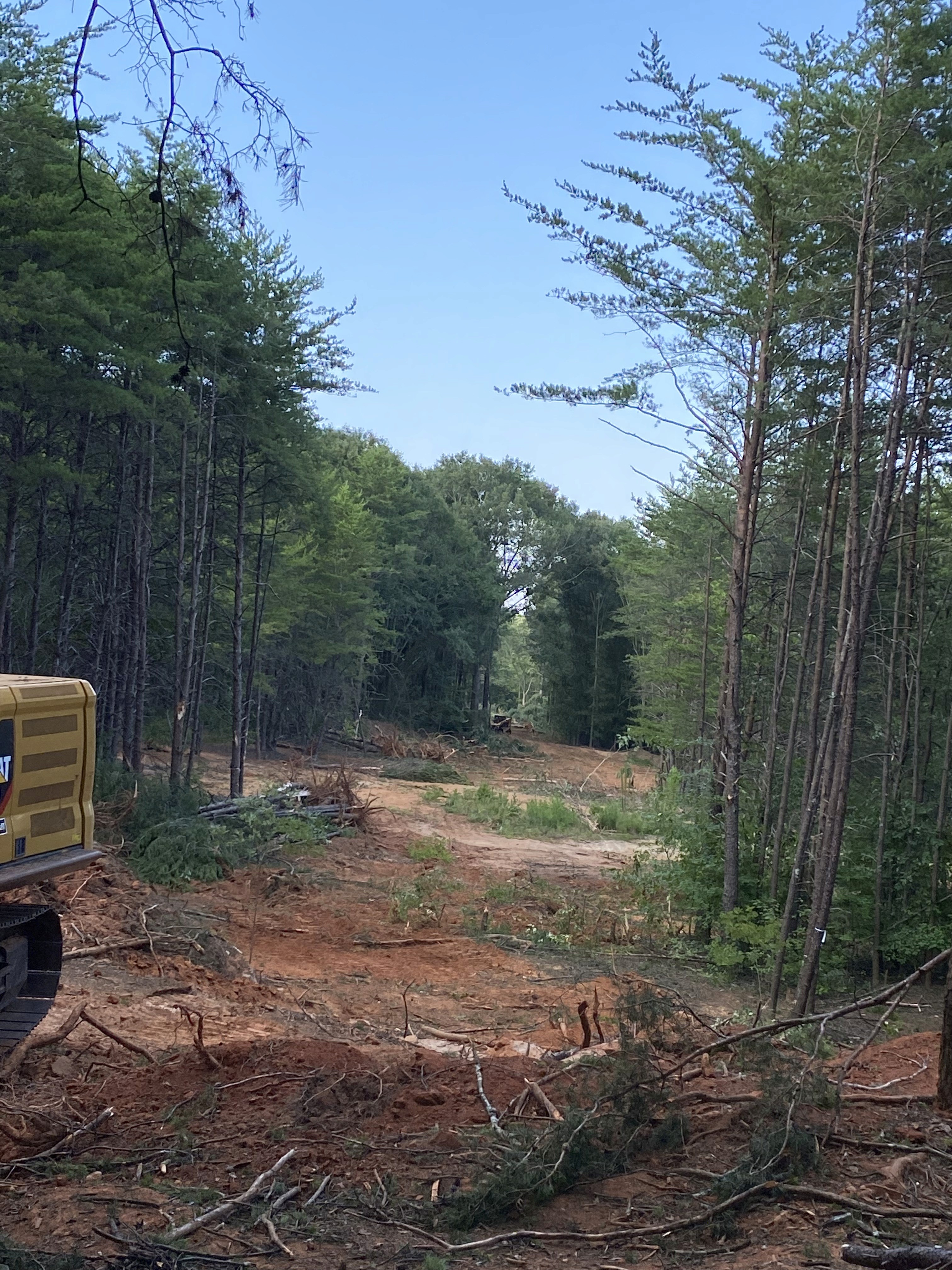
Verbal approval from a county planner is not a permit. Neither is a submitted application. Crews arrive, timber goes down, and then a stop-work order lands because the erosion and sediment control plan was still in review, or a wetland delineation flagged something no one caught.
The fix: Do not mobilize equipment until the land-disturbance permit, driveway permit, and any NCDEQ approvals are physically issued. If the site is over one acre in North Carolina, an approved E&SC plan is not optional. For larger sites, our team walks through the pre-construction sequencing in this developer's framework.
Mistake 2: Treating merchantable timber as debris
This is the quiet money-loser. A landowner hires a clearing contractor who mulches or burns pine that a timber buyer would have paid for. On a 40 acre tract with mature loblolly, that decision can leave five and even six figures on the ground.
The fix: Get a timber cruise before you sign a clearing contract. If the stand carries value, sell the timber first, then clear the residuals. Timberline buys standing timber directly and handles the clearing behind it, so the harvest revenue offsets the site prep cost instead of disappearing into a burn pile. More on that in how much your standing timber is worth.
Mistake 3: Skipping the erosion and sediment control setup
Silt fence installed after the first rain is silt fence installed too late. Inspectors do not warn twice in most counties, and a violation notice halts grading while fines accrue daily. Sediment leaving the site into a neighbor's pond or a state water is a separate problem entirely, and one that follows the landowner, not the contractor.
The fix: Install perimeter controls, construction entrances, and diversion ditches before any significant grubbing. Our breakdown of E&SC on large NC sites covers the sequence that keeps inspectors satisfied.
Mistake 4: Fragmenting the work across three contractors
A logger fells the timber. A separate outfit does the clearing. A third company hauls the debris. When the schedule slips or a stump field is left too rough for the grader, no one owns the problem. The landowner mediates while the excavator sits idle at $2,500 a day.
The fix: Use a single integrated crew that owns the tract from cruise to cleared pad. Timberline runs forestry, clearing, and heavy hauling in-house, which removes the finger-pointing and keeps one project manager accountable for the calendar.
Mistake 5: Ignoring soils and topography until the excavator arrives
Sandy loam in Johnston County behaves nothing like the heavy clay in Chatham. Slopes that read as gentle on a topo map become drainage problems once the canopy is gone. Landowners who buy a tract on aerial photos alone routinely discover perched water tables, buried debris from prior land uses, or rock they did not budget to move.
The fix: Walk the ground with someone who has cleared similar sites in the same county. A one hour site visit before the contract is signed prevents most of these surprises.
Mistake 6: Underestimating haul logistics
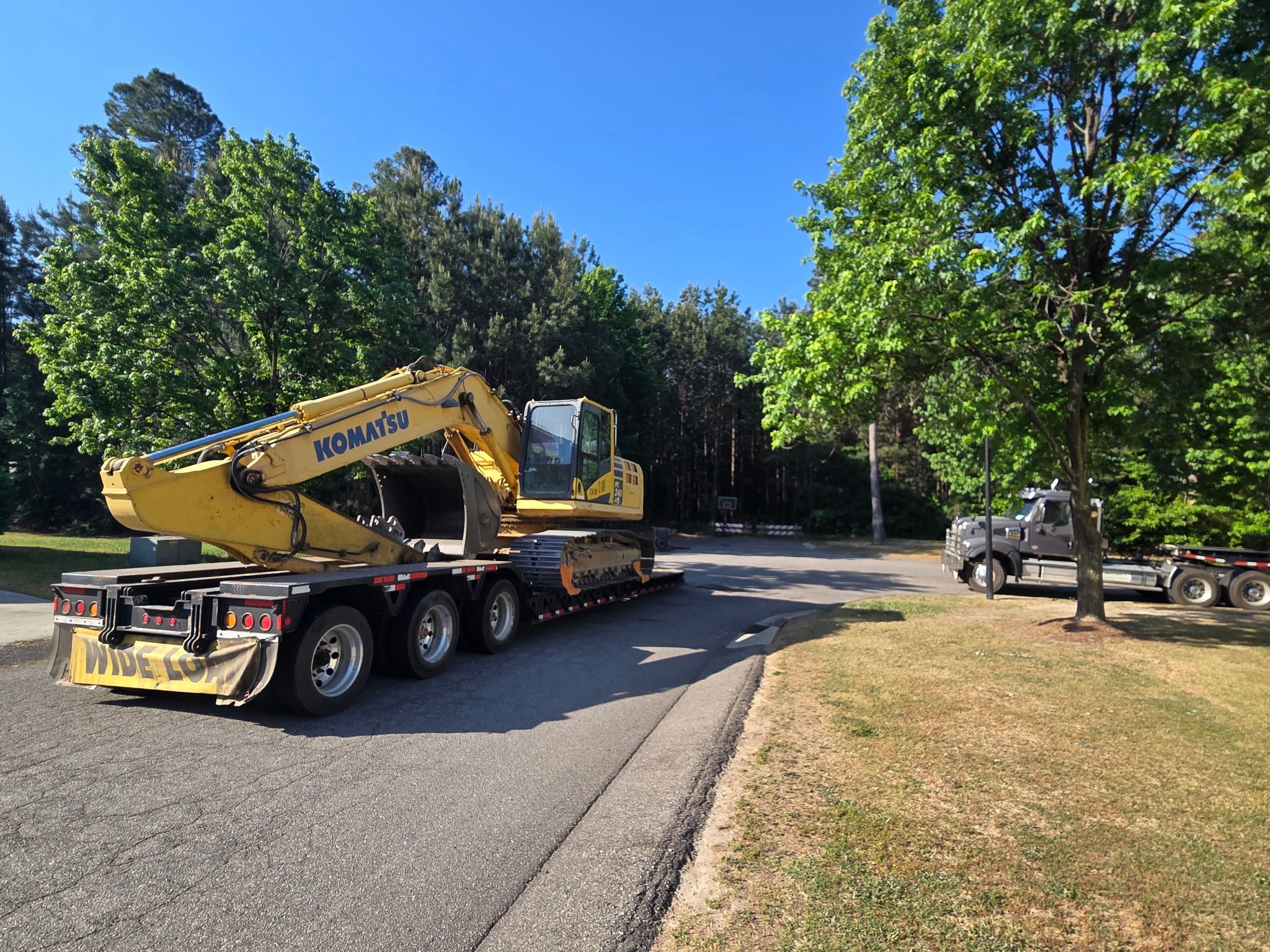
Debris volume from a wooded acre can exceed 100 loose cubic yards. If the haul route runs down a county road with a weight-restricted bridge, or the disposal site is 45 minutes away instead of 15, the trucking bill balloons and the clearing crew stalls waiting on empty trailers.
The fix: Confirm haul routes, tipping fees, and truck availability before the first tree drops. Our take on vetting a heavy haul partner covers the questions worth asking upfront.
The takeaway
Site prep delays are almost always sequencing failures, not effort failures. Permits first, timber value captured second, erosion controls in place third, then clearing under one roof with a haul plan already confirmed. If you are planning a tract in North Carolina, Virginia, South Carolina, or Georgia and want a single team from cruise to cleared pad, get in touch before you sign anything else.
Most construction delays we see on cleared sites do not come from weather or supply chains. They come from decisions made weeks before a single tree fell, when someone tried to save a few thousand dollars on sequencing, skipped a permit conversation, or hired three separate crews who each blamed the other when things went sideways. The pattern is remarkably consistent across the Southeast, and every mistake below has cost real landowners real money in the past year.
Mistake 1: Clearing before permits are actually in hand
Verbal approval from a county planner is not a permit. Neither is a submitted application. Crews arrive, timber goes down, and then a stop-work order lands because the erosion and sediment control plan was still in review, or a wetland delineation flagged something no one caught.
The fix: Do not mobilize equipment until the land-disturbance permit, driveway permit, and any NCDEQ approvals are physically issued. If the site is over one acre in North Carolina, an approved E&SC plan is not optional. For larger sites, our team walks through the pre-construction sequencing in this developer's framework.
Mistake 2: Treating merchantable timber as debris
This is the quiet money-loser. A landowner hires a clearing contractor who mulches or burns pine that a timber buyer would have paid for. On a 40 acre tract with mature loblolly, that decision can leave five and even six figures on the ground.
The fix: Get a timber cruise before you sign a clearing contract. If the stand carries value, sell the timber first, then clear the residuals. Timberline buys standing timber directly and handles the clearing behind it, so the harvest revenue offsets the site prep cost instead of disappearing into a burn pile. More on that in how much your standing timber is worth.
Mistake 3: Skipping the erosion and sediment control setup
Silt fence installed after the first rain is silt fence installed too late. Inspectors do not warn twice in most counties, and a violation notice halts grading while fines accrue daily. Sediment leaving the site into a neighbor's pond or a state water is a separate problem entirely, and one that follows the landowner, not the contractor.
The fix: Install perimeter controls, construction entrances, and diversion ditches before any significant grubbing. Our breakdown of E&SC on large NC sites covers the sequence that keeps inspectors satisfied.
Mistake 4: Fragmenting the work across three contractors
A logger fells the timber. A separate outfit does the clearing. A third company hauls the debris. When the schedule slips or a stump field is left too rough for the grader, no one owns the problem. The landowner mediates while the excavator sits idle at $2,500 a day.
The fix: Use a single integrated crew that owns the tract from cruise to cleared pad. Timberline runs forestry, clearing, and heavy hauling in-house, which removes the finger-pointing and keeps one project manager accountable for the calendar.
Mistake 5: Ignoring soils and topography until the excavator arrives
Sandy loam in Johnston County behaves nothing like the heavy clay in Chatham. Slopes that read as gentle on a topo map become drainage problems once the canopy is gone. Landowners who buy a tract on aerial photos alone routinely discover perched water tables, buried debris from prior land uses, or rock they did not budget to move.
The fix: Walk the ground with someone who has cleared similar sites in the same county. A one hour site visit before the contract is signed prevents most of these surprises.
Mistake 6: Underestimating haul logistics
Debris volume from a wooded acre can exceed 100 loose cubic yards. If the haul route runs down a county road with a weight-restricted bridge, or the disposal site is 45 minutes away instead of 15, the trucking bill balloons and the clearing crew stalls waiting on empty trailers.
The fix: Confirm haul routes, tipping fees, and truck availability before the first tree drops. Our take on vetting a heavy haul partner covers the questions worth asking upfront.
The takeaway
Site prep delays are almost always sequencing failures, not effort failures. Permits first, timber value captured second, erosion controls in place third, then clearing under one roof with a haul plan already confirmed. If you are planning a tract in North Carolina, Virginia, South Carolina, or Georgia and want a single team from cruise to cleared pad, get in touch before you sign anything else.