2025-07-14T00:00:00.000Z
Why Utilities Are Shifting from Reactive ROW Clearing to Integrated Vegetation Management
Timberline Forestry breaks down the shift from reactive ROW clearing to IVM, covering reliability benefits, compliance drivers, and how a modern program is structured across Southeast utility corridors.

Why Utility Companies Are Moving from Reactive ROW Clearing to Integrated Vegetation Management
Utilities across the Southeast are retiring the old cut-and-come-back model of right-of-way maintenance because it costs more, delivers worse reliability, and quietly rebuilds the same problem every three to five years. The shift underway is toward Integrated Vegetation Management (IVM): a planned, data-driven program that uses mechanical, manual, cultural, and selective chemical treatments to convert ROW corridors into low-growing, stable plant communities that resist tall regrowth. The reliability payoff is measurable, and the operational logic is hard to argue with once you see the numbers on a single storm season.
What the old model looked like
For decades, the default was reactive. A circuit would be flagged after a customer complaint, a tripped recloser, or a windshield survey showing crowns encroaching the conductor. A contractor would mobilize, clear the corridor wall-to-wall, and leave. Two years later, fast-growing pioneer species like sweetgum, tulip poplar, and tree-of-heaven would rocket back into the wire zone, often denser than before because sunlight and disturbed soil favored exactly the wrong species.
The costs stacked up in three places. Unit price per mile stayed flat or climbed, cycle length stayed short, and outage exposure barely improved between visits. Storm hardening programs got credit for pole upgrades, but the vegetation piece kept resetting to zero.
What changed, and why
Three forces pushed utilities to rethink the approach. FERC and NERC reliability standards (FAC-003 in particular) raised the compliance cost of a vegetation-caused outage on transmission. State PUCs began scrutinizing distribution reliability indices (SAIDI, SAIFI, CAIDI) with vegetation broken out as a line item. And ANSI A300 Part 7, the industry standard for IVM, gave utilities a defensible, published framework for programs that use more than just a bush hog.
At the same time, GIS, LiDAR, and satellite-based growth modeling made it possible to prioritize spans by risk rather than by the calendar. A 40-mile feeder is no longer treated as one uniform job. It is scored span by span, and treatment intensity follows the risk.
For a deeper walkthrough of the standard itself, see our post on integrated vegetation management and ANSI A300 Part 7.
What a modern IVM program actually does
A working IVM program layers treatments so each visit does more than the last one.
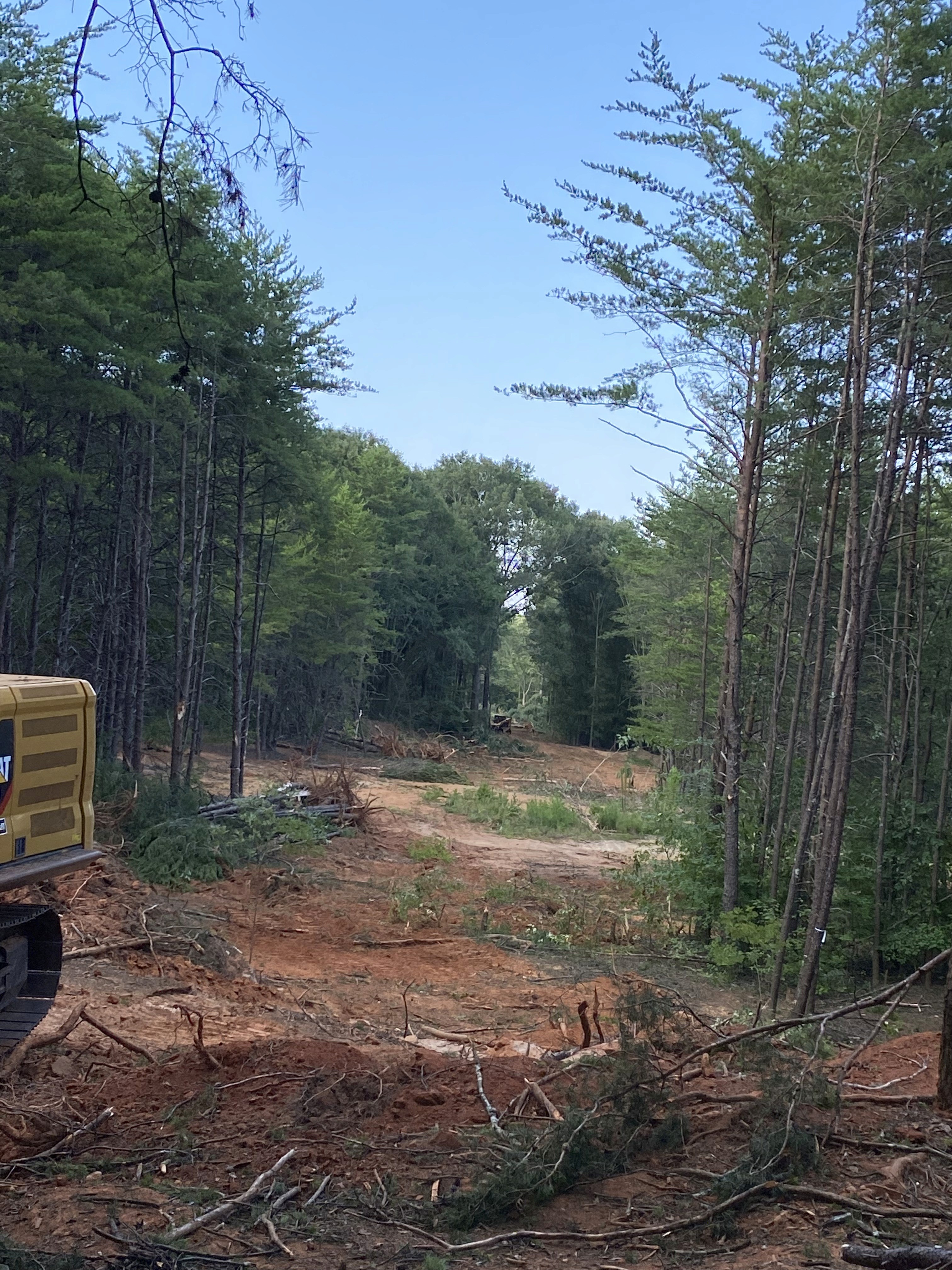
Initial mechanical reset: Side-trim, mow, and mulch to bring the corridor into spec and expose the stem population.
Selective herbicide follow-up: Target only the tall-growing incompatible species with low-volume basal, cut-stump, or foliar applications. Native shrubs, forbs, and grasses are left alone.
Cultural conversion: Over two or three cycles, the corridor shifts to a stable community of blackberry, sumac, dogwood, and native grasses that outcompete tree seedlings.
Danger tree work off-ROW: LiDAR-flagged hazard trees outside the wire zone are removed before they fall in.
Documentation: Every span gets a treatment record, before/after imagery, and a risk score that feeds the next cycle plan.
Cycle length typically stretches from three years to five or six once conversion takes hold, and vegetation-caused outages on treated circuits drop sharply.
What it means for reliability
The reliability story is straightforward. Tall-growing stems in the wire zone are the dominant cause of tree-related outages on distribution. Remove them permanently and you remove the failure mode. Off-ROW danger trees, the other major cause, get addressed by the LiDAR and patrol layer. What you are left with is weather that no clearing program could prevent anyway, and even there, converted ROWs give crews faster access during restoration because the corridor is walkable.
For DOT right-of-way planners, the same logic applies to sight lines, sign visibility, and shoulder drainage. Reactive mowing keeps the grass short. IVM keeps the woody encroachment from ever taking hold in the first place.
What Timberline brings to the shift
Our utility vegetation management division is built for this model. We run our own crews and equipment across North Carolina, South Carolina, Virginia, and Georgia, which means one accountable partner for ROW clearing, danger tree removal, herbicide application, and the reporting that closes the compliance loop. Because we also operate forestry and heavy hauling divisions, we can handle the timber and debris side of a large corridor project without subcontracting the value away.
If your reliability numbers are stalling and your clearing spend is climbing, the corridor is telling you something. A conversation about an IVM pilot on your worst-performing feeder is a good place to start. Reach out here.
Why Utility Companies Are Moving from Reactive ROW Clearing to Integrated Vegetation Management
Utilities across the Southeast are retiring the old cut-and-come-back model of right-of-way maintenance because it costs more, delivers worse reliability, and quietly rebuilds the same problem every three to five years. The shift underway is toward Integrated Vegetation Management (IVM): a planned, data-driven program that uses mechanical, manual, cultural, and selective chemical treatments to convert ROW corridors into low-growing, stable plant communities that resist tall regrowth. The reliability payoff is measurable, and the operational logic is hard to argue with once you see the numbers on a single storm season.
What the old model looked like
For decades, the default was reactive. A circuit would be flagged after a customer complaint, a tripped recloser, or a windshield survey showing crowns encroaching the conductor. A contractor would mobilize, clear the corridor wall-to-wall, and leave. Two years later, fast-growing pioneer species like sweetgum, tulip poplar, and tree-of-heaven would rocket back into the wire zone, often denser than before because sunlight and disturbed soil favored exactly the wrong species.
The costs stacked up in three places. Unit price per mile stayed flat or climbed, cycle length stayed short, and outage exposure barely improved between visits. Storm hardening programs got credit for pole upgrades, but the vegetation piece kept resetting to zero.
What changed, and why
Three forces pushed utilities to rethink the approach. FERC and NERC reliability standards (FAC-003 in particular) raised the compliance cost of a vegetation-caused outage on transmission. State PUCs began scrutinizing distribution reliability indices (SAIDI, SAIFI, CAIDI) with vegetation broken out as a line item. And ANSI A300 Part 7, the industry standard for IVM, gave utilities a defensible, published framework for programs that use more than just a bush hog.
At the same time, GIS, LiDAR, and satellite-based growth modeling made it possible to prioritize spans by risk rather than by the calendar. A 40-mile feeder is no longer treated as one uniform job. It is scored span by span, and treatment intensity follows the risk.
For a deeper walkthrough of the standard itself, see our post on integrated vegetation management and ANSI A300 Part 7.
What a modern IVM program actually does
A working IVM program layers treatments so each visit does more than the last one.
Initial mechanical reset: Side-trim, mow, and mulch to bring the corridor into spec and expose the stem population.
Selective herbicide follow-up: Target only the tall-growing incompatible species with low-volume basal, cut-stump, or foliar applications. Native shrubs, forbs, and grasses are left alone.
Cultural conversion: Over two or three cycles, the corridor shifts to a stable community of blackberry, sumac, dogwood, and native grasses that outcompete tree seedlings.
Danger tree work off-ROW: LiDAR-flagged hazard trees outside the wire zone are removed before they fall in.
Documentation: Every span gets a treatment record, before/after imagery, and a risk score that feeds the next cycle plan.
Cycle length typically stretches from three years to five or six once conversion takes hold, and vegetation-caused outages on treated circuits drop sharply.
What it means for reliability
The reliability story is straightforward. Tall-growing stems in the wire zone are the dominant cause of tree-related outages on distribution. Remove them permanently and you remove the failure mode. Off-ROW danger trees, the other major cause, get addressed by the LiDAR and patrol layer. What you are left with is weather that no clearing program could prevent anyway, and even there, converted ROWs give crews faster access during restoration because the corridor is walkable.
For DOT right-of-way planners, the same logic applies to sight lines, sign visibility, and shoulder drainage. Reactive mowing keeps the grass short. IVM keeps the woody encroachment from ever taking hold in the first place.
What Timberline brings to the shift
Our utility vegetation management division is built for this model. We run our own crews and equipment across North Carolina, South Carolina, Virginia, and Georgia, which means one accountable partner for ROW clearing, danger tree removal, herbicide application, and the reporting that closes the compliance loop. Because we also operate forestry and heavy hauling divisions, we can handle the timber and debris side of a large corridor project without subcontracting the value away.
If your reliability numbers are stalling and your clearing spend is climbing, the corridor is telling you something. A conversation about an IVM pilot on your worst-performing feeder is a good place to start. Reach out here.