2025-07-14
How to Plan and Execute a Prescribed Burn on Southeastern Timberland
A step-by-step guide to planning, permitting, and executing a prescribed burn on longleaf or loblolly timberland in NC, SC, VA, and GA, covering objectives, burn plans, ignition, and post-burn assessment.

A prescribed burn on Southeastern timberland is planned and executed in six stages: define the burn objective, write a site-specific burn plan, secure state permits and notify neighbors, prepare firebreaks and equipment, ignite under a narrow window of legal weather conditions with a trained crew, and complete a post-burn assessment within 30 days. Done right on a longleaf or loblolly stand in North Carolina, Virginia, South Carolina, or Georgia, it reduces fuel loads, controls hardwood competition, improves wildlife habitat, and raises long-term timber value. Done wrong, it escapes containment or scorches crowns you meant to protect.
Here is how to work through it, step by step.
Step 1: Decide what the burn is actually for
Before anything else, name the objective in one sentence. "Reduce accumulated pine straw and duff in a 12-year-old loblolly stand" is a different burn from "set back yaupon and sweetgum understory in a mature longleaf stand" or "prepare a cutover for planting next spring." The objective drives every downstream choice: season, fire intensity, ignition pattern, and even how you cut your firebreaks.
Common objectives on Southeastern pine ground:
Fuel reduction: cool, backing fires in winter to lower wildfire risk.
Hardwood control: hotter growing-season burns to kill competing stems above ankle height.
Wildlife habitat: rotational burns on a two to three year cycle for quail, turkey, and deer browse.
Site prep: heavier burns after a harvest to clear slash before planting.
If you cannot state the objective, you are not ready to burn.
Step 2: Write the burn plan
The written burn plan is the document your state forestry agency will ask for and the one your insurance carrier will want on file. It should cover the tract map with acreage and firebreak locations, adjacent smoke-sensitive receptors (roads, homes, poultry houses, hospitals), acceptable weather parameters (temperature, relative humidity, wind speed and direction, mixing height, transport wind), fuel model and expected fire behavior, ignition pattern, crew size and equipment, contingency plan, and smoke management strategy.
North Carolina, South Carolina, Virginia, and Georgia each have their own certified burner programs and plan templates. A forest management plan built for the property should already flag which stands are burn candidates and on what rotation.
Step 3: Permit, notify, and check the forecast window
Same-day burn authorization is required in all four states. In North Carolina you call the NC Forest Service county office; in Georgia, the Georgia Forestry Commission; in South Carolina, SCFC; in Virginia, VDOF. Authorization is granted or denied based on that day's smoke dispersion and fire danger.
Beyond the state call, notify the county fire marshal, adjacent landowners, and any highway that could be affected by drifting smoke. Do this the day before, not the morning of.
Weather is the gatekeeper. A typical prescription window looks like 30 to 55 percent relative humidity, steady winds of 6 to 15 mph from a direction that carries smoke away from receptors, mixing height above 1,700 feet, and no forecast overnight inversion. If any parameter falls outside the plan, you postpone. There is always another day.
Step 4: Prepare the ground
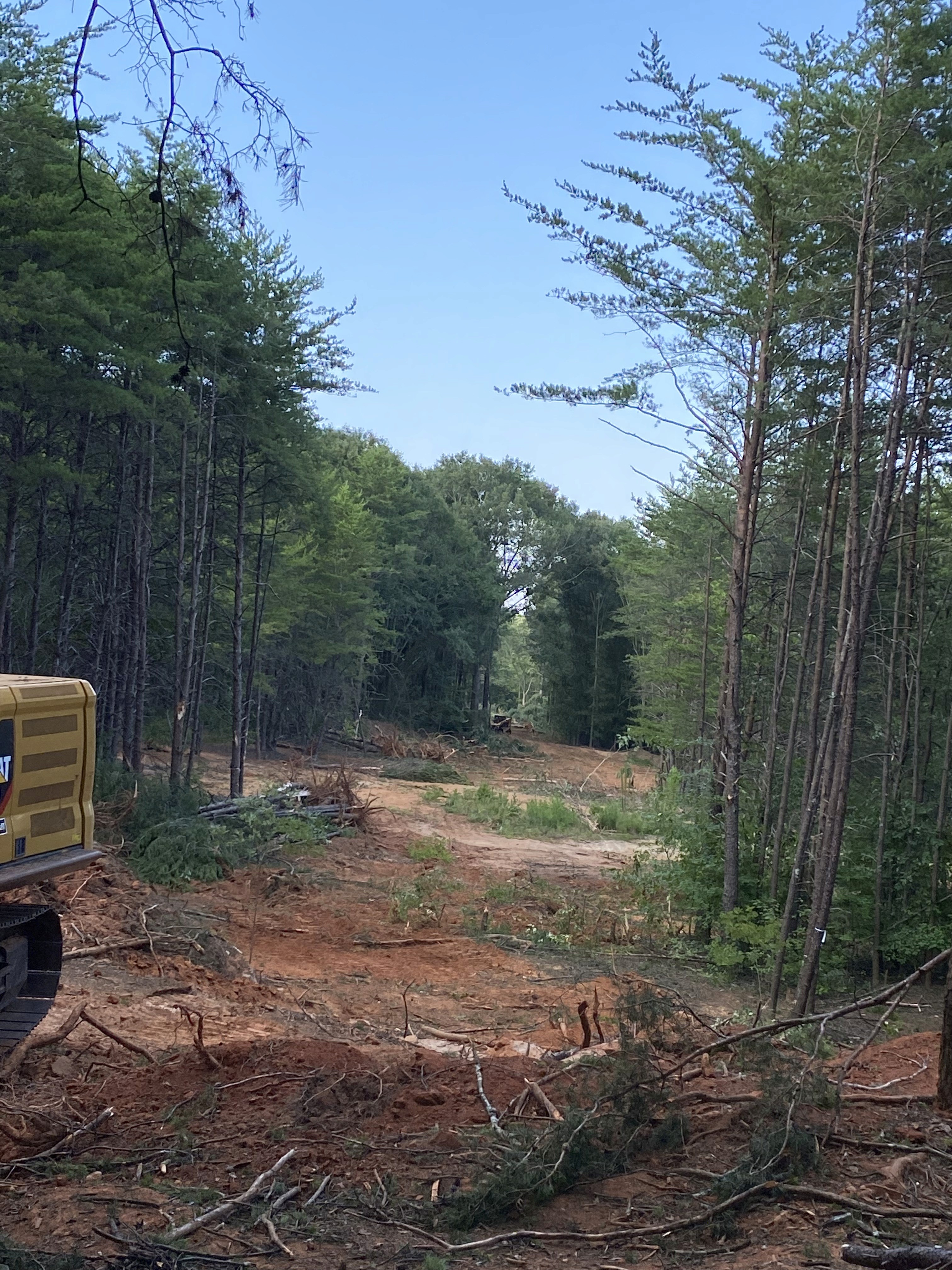
Firebreaks are cut with a dozer or harrow down to bare mineral soil, typically 8 to 12 feet wide on the downwind side and tied into roads, streams, or existing breaks on the other sides. Blow leaves off breaks before ignition. Stage water, a UTV with a slip-on tank, hand tools, and drip torches at known access points. Confirm cell coverage across the tract or bring radios.
Step 5: Ignite with a trained crew
A backing fire is set first along the downwind firebreak and allowed to move slowly into the wind, establishing a wide blackline. Once the blackline is secure, flanking or strip head fires are set at spacing determined by desired flame length, usually 30 to 100 feet apart. The burn boss watches flame length, spotting, and smoke column behavior, and calls adjustments in real time. A crew of three to five is typical for tracts under 200 acres; larger blocks need more.
Never burn without a certified burner on site and never leave the tract until the interior is out cold or fully contained inside secure lines.
Step 6: Mop up and assess
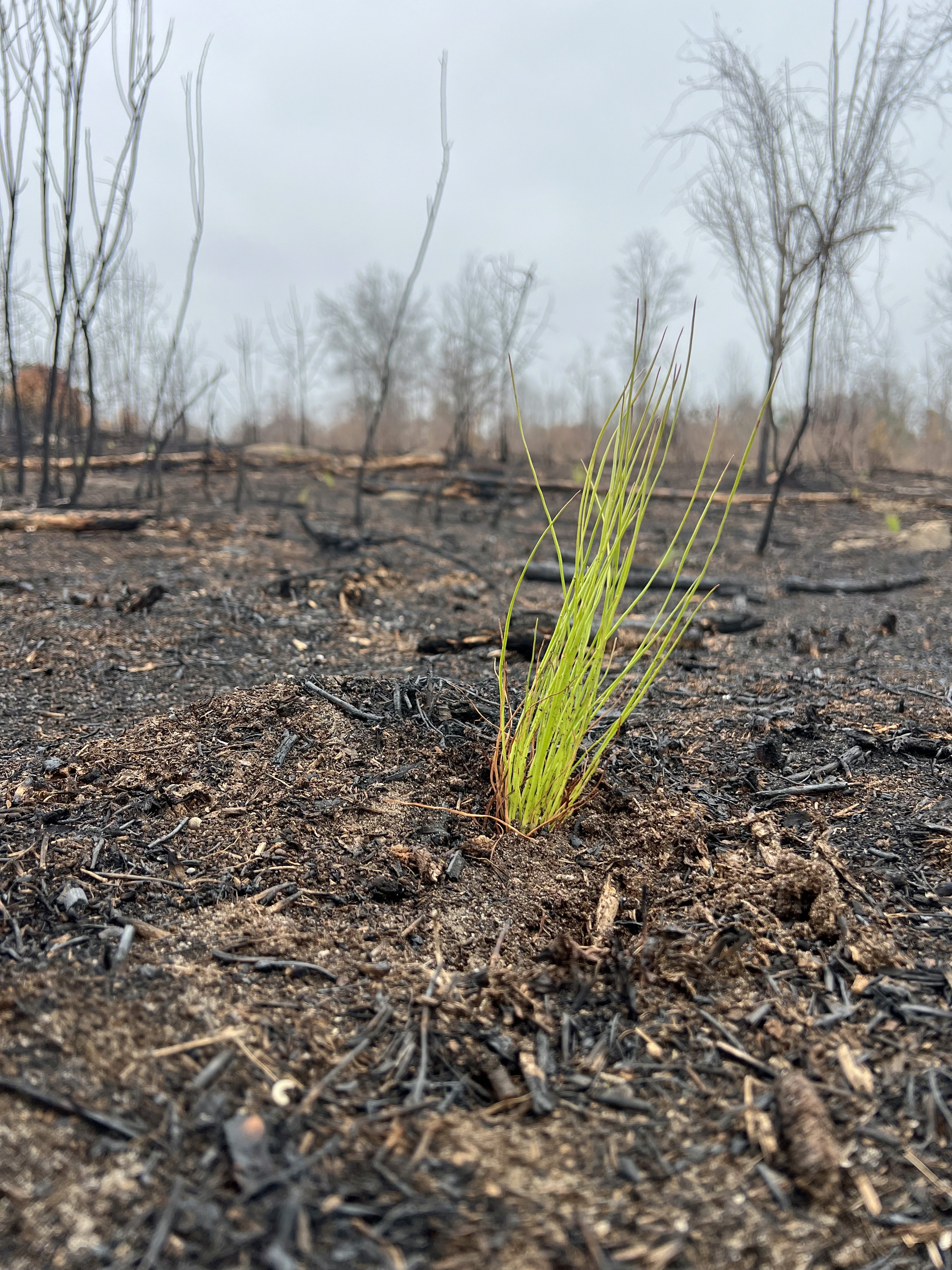
Walk the perimeter at dusk and again the next morning, extinguishing any smoldering stumps or snags within 100 feet of the line. Within 30 days, walk the interior and score the burn against the objective: percent of the unit burned, average scorch height, hardwood top-kill, and any unintended damage. Log the results in the stand record so the next burn on that rotation starts from real data.
When to bring in a partner
Prescribed fire rewards experience and punishes shortcuts. If you do not have a certified burner, the equipment, and the crew on staff, contract the burn out rather than improvise. Timberline runs prescribed burns as part of an integrated land services program across NC, SC, VA, and GA, with the same crews that handle site preparation and timber harvests, so the fire plan lines up with the longer arc of the stand.
If you are weighing fire against other tools, our comparison of prescribed burning and mechanical thinning is a good next read. Ready to scope a burn on your tract? Get in touch.
A prescribed burn on Southeastern timberland is planned and executed in six stages: define the burn objective, write a site-specific burn plan, secure state permits and notify neighbors, prepare firebreaks and equipment, ignite under a narrow window of legal weather conditions with a trained crew, and complete a post-burn assessment within 30 days. Done right on a longleaf or loblolly stand in North Carolina, Virginia, South Carolina, or Georgia, it reduces fuel loads, controls hardwood competition, improves wildlife habitat, and raises long-term timber value. Done wrong, it escapes containment or scorches crowns you meant to protect.
Here is how to work through it, step by step.
Step 1: Decide what the burn is actually for
Before anything else, name the objective in one sentence. "Reduce accumulated pine straw and duff in a 12-year-old loblolly stand" is a different burn from "set back yaupon and sweetgum understory in a mature longleaf stand" or "prepare a cutover for planting next spring." The objective drives every downstream choice: season, fire intensity, ignition pattern, and even how you cut your firebreaks.
Common objectives on Southeastern pine ground:
Fuel reduction: cool, backing fires in winter to lower wildfire risk.
Hardwood control: hotter growing-season burns to kill competing stems above ankle height.
Wildlife habitat: rotational burns on a two to three year cycle for quail, turkey, and deer browse.
Site prep: heavier burns after a harvest to clear slash before planting.
If you cannot state the objective, you are not ready to burn.
Step 2: Write the burn plan
The written burn plan is the document your state forestry agency will ask for and the one your insurance carrier will want on file. It should cover the tract map with acreage and firebreak locations, adjacent smoke-sensitive receptors (roads, homes, poultry houses, hospitals), acceptable weather parameters (temperature, relative humidity, wind speed and direction, mixing height, transport wind), fuel model and expected fire behavior, ignition pattern, crew size and equipment, contingency plan, and smoke management strategy.
North Carolina, South Carolina, Virginia, and Georgia each have their own certified burner programs and plan templates. A forest management plan built for the property should already flag which stands are burn candidates and on what rotation.
Step 3: Permit, notify, and check the forecast window
Same-day burn authorization is required in all four states. In North Carolina you call the NC Forest Service county office; in Georgia, the Georgia Forestry Commission; in South Carolina, SCFC; in Virginia, VDOF. Authorization is granted or denied based on that day's smoke dispersion and fire danger.
Beyond the state call, notify the county fire marshal, adjacent landowners, and any highway that could be affected by drifting smoke. Do this the day before, not the morning of.
Weather is the gatekeeper. A typical prescription window looks like 30 to 55 percent relative humidity, steady winds of 6 to 15 mph from a direction that carries smoke away from receptors, mixing height above 1,700 feet, and no forecast overnight inversion. If any parameter falls outside the plan, you postpone. There is always another day.
Step 4: Prepare the ground
Firebreaks are cut with a dozer or harrow down to bare mineral soil, typically 8 to 12 feet wide on the downwind side and tied into roads, streams, or existing breaks on the other sides. Blow leaves off breaks before ignition. Stage water, a UTV with a slip-on tank, hand tools, and drip torches at known access points. Confirm cell coverage across the tract or bring radios.
Step 5: Ignite with a trained crew
A backing fire is set first along the downwind firebreak and allowed to move slowly into the wind, establishing a wide blackline. Once the blackline is secure, flanking or strip head fires are set at spacing determined by desired flame length, usually 30 to 100 feet apart. The burn boss watches flame length, spotting, and smoke column behavior, and calls adjustments in real time. A crew of three to five is typical for tracts under 200 acres; larger blocks need more.
Never burn without a certified burner on site and never leave the tract until the interior is out cold or fully contained inside secure lines.
Step 6: Mop up and assess
Walk the perimeter at dusk and again the next morning, extinguishing any smoldering stumps or snags within 100 feet of the line. Within 30 days, walk the interior and score the burn against the objective: percent of the unit burned, average scorch height, hardwood top-kill, and any unintended damage. Log the results in the stand record so the next burn on that rotation starts from real data.
When to bring in a partner
Prescribed fire rewards experience and punishes shortcuts. If you do not have a certified burner, the equipment, and the crew on staff, contract the burn out rather than improvise. Timberline runs prescribed burns as part of an integrated land services program across NC, SC, VA, and GA, with the same crews that handle site preparation and timber harvests, so the fire plan lines up with the longer arc of the stand.
If you are weighing fire against other tools, our comparison of prescribed burning and mechanical thinning is a good next read. Ready to scope a burn on your tract? Get in touch.