April 29th, 2026
What to Expect When You Sell Your Timber in North Carolina
A clear, step-by-step guide to selling timber in North Carolina, from the first call to final cleanup. Learn how the process works with Timberline Forest Products.
What to Expect When You Sell Your Timber in North Carolina
Selling timber is something most landowners only do a few times in their lives. Without experience on the buyer's side of the process, it can be hard to know what is normal, what to ask for, and what to watch out for. This guide walks through exactly how a timber sale works when it is done right, from your first call to the day the equipment leaves your property.
Step 1: The initial conversation
Everything starts with a short conversation. You call or contact a timber buyer, provide the basic information, property location, approximate acreage, and what you are hoping to accomplish, and the buyer decides whether a site visit makes sense.
You do not need to know the species, volumes, or market prices going into that first call. What the buyer needs from you is a clear picture of your goals: Are you looking for maximum income? Preparing to sell or develop the land? Improving the health of the forest? Wanting to open up hunting ground? Those answers shape what type of harvest is appropriate.
At Timberline, we act as both buyer and harvesting company through Timberline Forest Products, so the team you speak with on the phone is the same team that will be on your land.
Step 2: The site visit and timber evaluation
If the initial conversation suggests a reasonable fit, the next step is walking the property together.
During the site visit, the buyer will:
· Walk the timber stand to assess species mix, tree size, density, and general health.
· Evaluate access: road conditions, ground stability, where equipment can stage, and how logs will be hauled out.
· Identify any areas with sensitive conditions: stream buffers, wet soils, slopes that require special attention.
· Listen to any areas you want protected, avoided, or treated differently.
At Timberline, we also use forest inventory data and GIS mapping when helpful to develop a more accurate picture of your timber assets before making an offer.
This is your opportunity to ask questions in person: How will you access the property? Where will you put the landing? What will you leave behind? What happens to the roads when you are done? A good buyer welcomes those questions, because aligning expectations before the job starts prevents problems during it.
Step 3: The offer and the timber contract
After the site visit, the buyer puts together a proposal based on what they found, what your goals are, and current market conditions.
What a fair timber contract should include:
· A clear description of the area to be harvested (often with a map or boundary description).
· How payment is structured: typically a lump-sum purchase price for standing timber, paid at or near contract signing.
· Expected timing: when work will start and roughly how long it will take.
· How the land will be left when the job is complete: cleanup of decks and access routes, any road improvements, and any specific areas or features to be protected.
· Any obligations for replanting, if applicable.
Read the contract carefully, and do not hesitate to ask for clarification on anything that is unclear. A reputable buyer will take the time to explain it.
For most private timber sales in North Carolina, the period from contract signing to the start of work is typically within 30 days, depending on scheduling and weather.
Step 4: The harvest
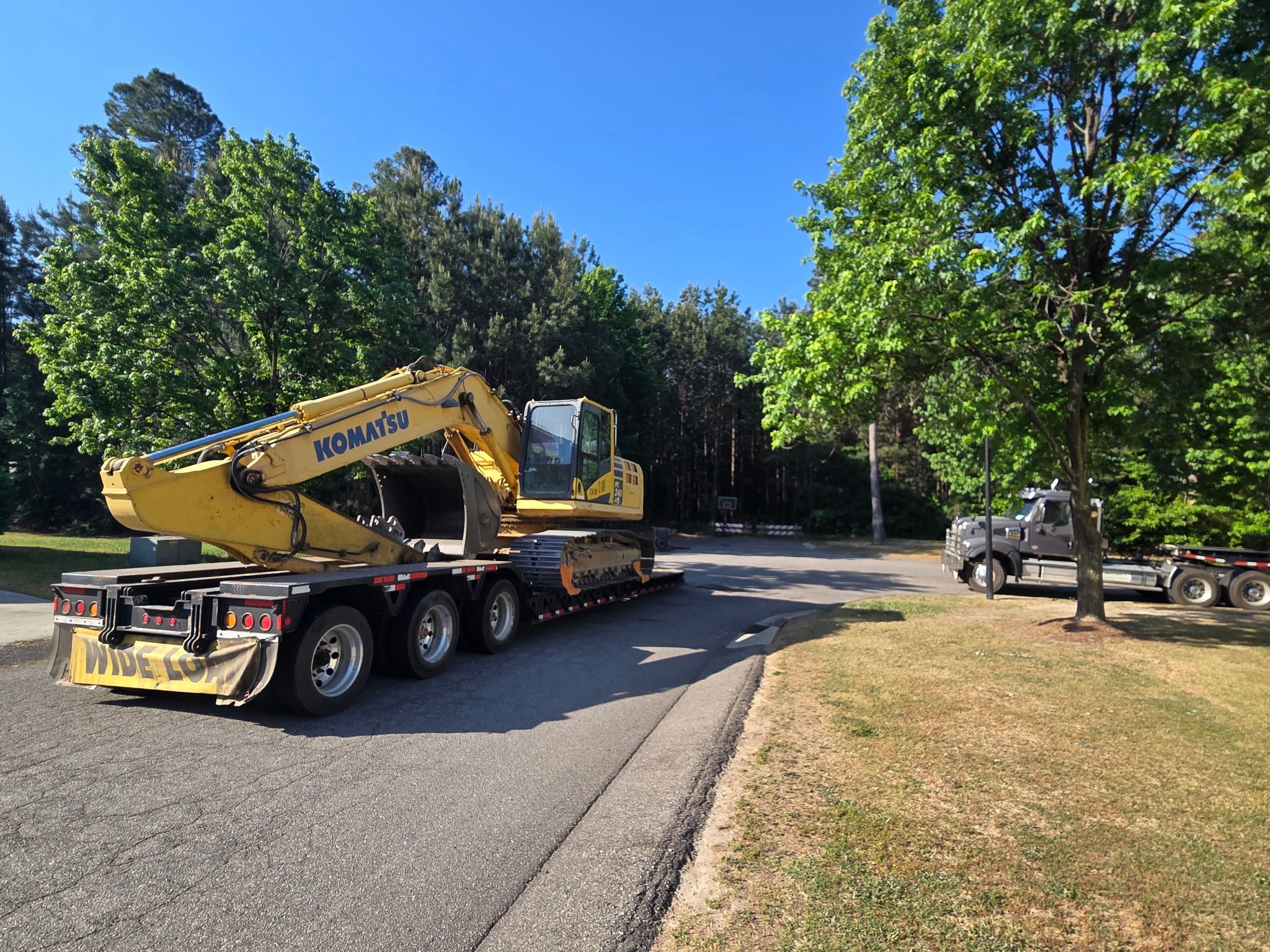
Once the contract is signed and a start date is set, the buyer mobilizes equipment to the property. A typical harvest includes:
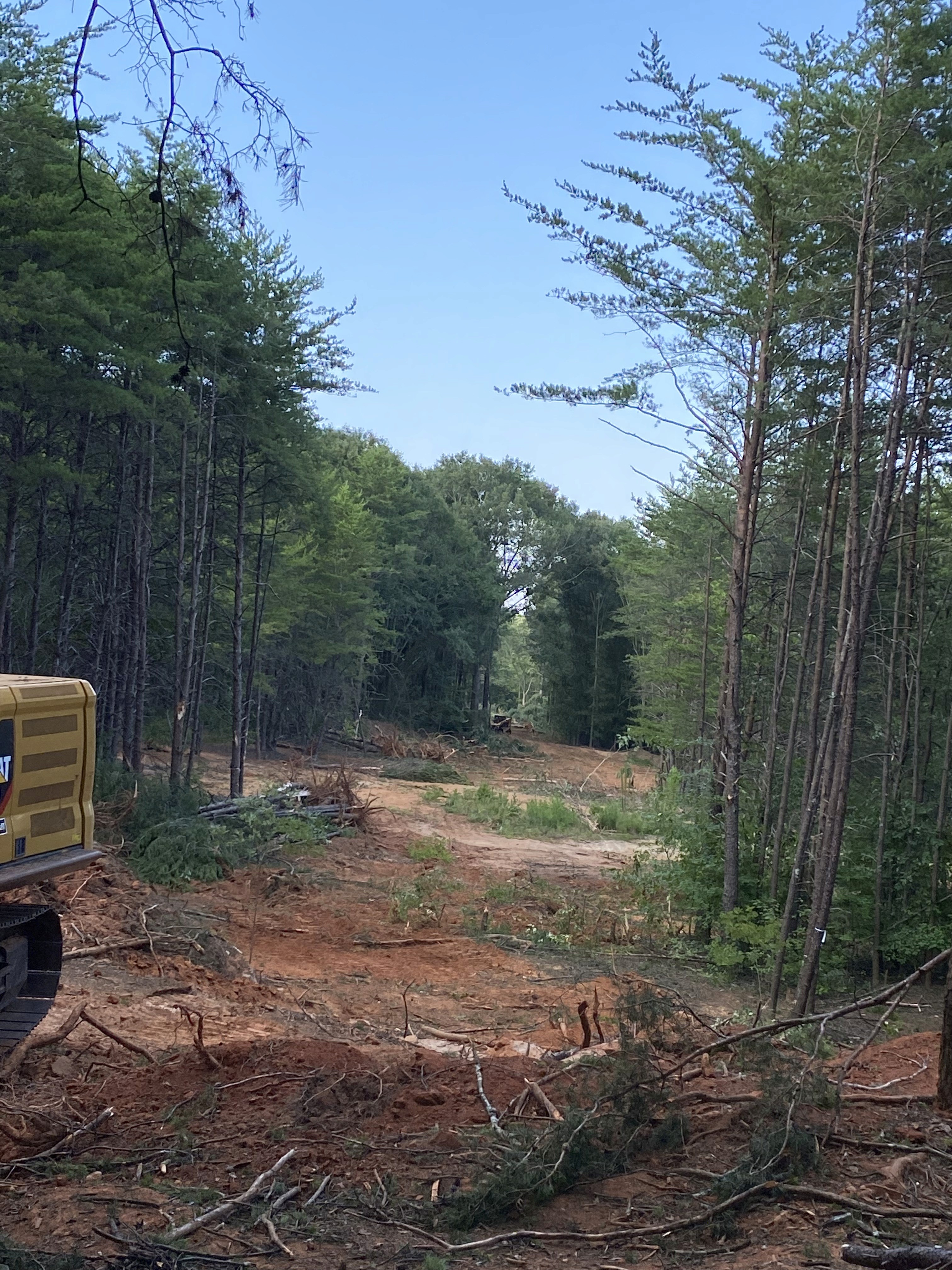
· Access and landing construction. The crew builds or improves roads and establishes a log landing where timber is sorted and loaded for hauling.
· Felling and skidding. Trees are cut and moved to the landing using feller-bunchers, skidders, or other equipment suited to your terrain.
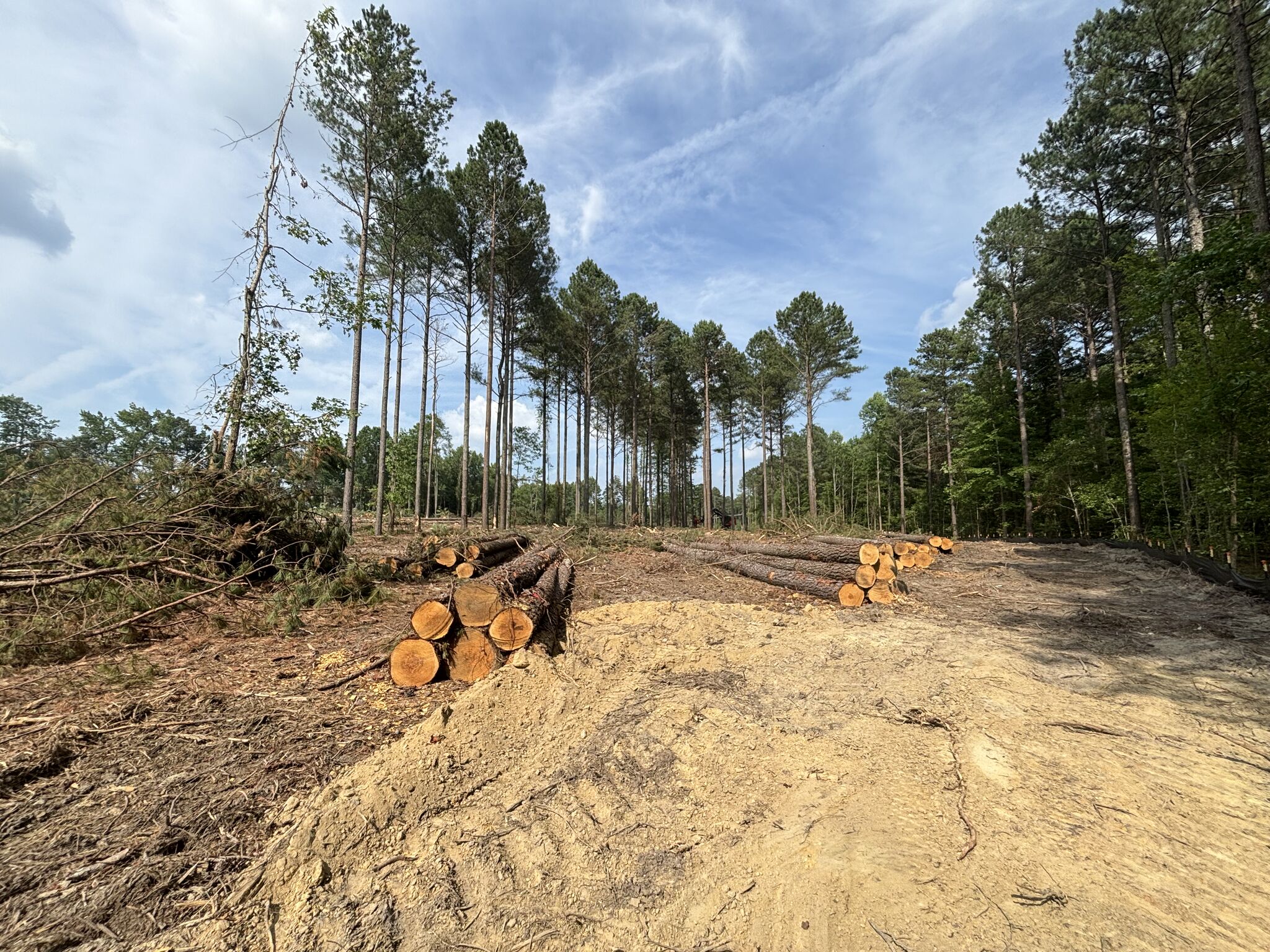
· Processing and sorting. At the landing, trees are processed into logs, chips, or other products by species and size class.
· Hauling. Loads are transported to mills throughout the region.
At Timberline, the same company that manages the harvest also handles hauling through our in-house Heavy Hauling division, which means tighter schedule control and fewer third-party coordination issues for you.
Throughout the job, you should have a direct contact you can call with questions or if something looks different from what was planned.
Step 5: Cleanup and final walkthrough
When the last load leaves the property, the job is not over. Cleanup includes:
· Removing all equipment from the site.
· Cleaning up log decks, landing areas, and access routes to the agreed standard.
· Addressing any road or drainage work outlined in the contract.
The final walkthrough, ideally done together, is your chance to confirm that the work was completed as agreed. If there are any areas that need additional attention, this is the time to address them before the crew demobilizes.
After the harvest: your land's next chapter
After the timber is removed, you have several options depending on your goals:
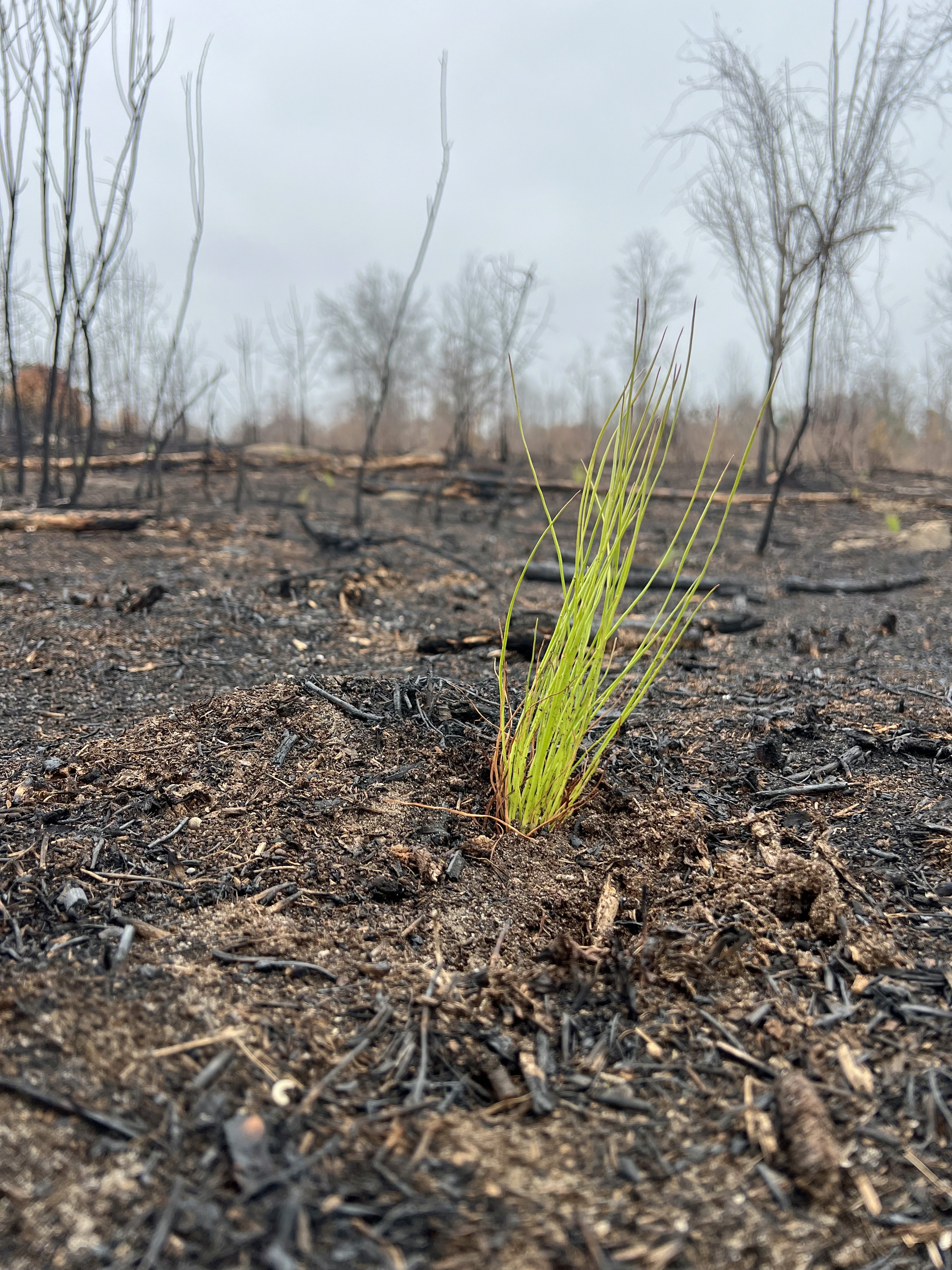
· Natural regeneration. In many cases, the site will regenerate naturally, pine from seed and hardwood from stump sprouts, without any intervention.
· Site preparation and replanting. If you want to establish a new pine plantation for a future rotation, site prep and planting can follow the harvest. Our Forest Management team handles both.
· Land clearing and development. If your plan is to convert the land to another use, a homesite, farm fields, or a subdivision, our Contracting division can clear, grade, and prepare the site after the timber is removed.
The best outcome from a timber sale is a property in good condition that is set up for whatever you want to do next. That requires honest communication at the start, careful planning during the job, and clean execution from start to finish.
Want to understand what a timber sale would look like on your property? Call (919) 909-8630 or reach out online, we will walk you through the process with no obligation.
What to Expect When You Sell Your Timber in North Carolina
Selling timber is something most landowners only do a few times in their lives. Without experience on the buyer's side of the process, it can be hard to know what is normal, what to ask for, and what to watch out for. This guide walks through exactly how a timber sale works when it is done right, from your first call to the day the equipment leaves your property.
Step 1: The initial conversation
Everything starts with a short conversation. You call or contact a timber buyer, provide the basic information, property location, approximate acreage, and what you are hoping to accomplish, and the buyer decides whether a site visit makes sense.
You do not need to know the species, volumes, or market prices going into that first call. What the buyer needs from you is a clear picture of your goals: Are you looking for maximum income? Preparing to sell or develop the land? Improving the health of the forest? Wanting to open up hunting ground? Those answers shape what type of harvest is appropriate.
At Timberline, we act as both buyer and harvesting company through Timberline Forest Products, so the team you speak with on the phone is the same team that will be on your land.
Step 2: The site visit and timber evaluation
If the initial conversation suggests a reasonable fit, the next step is walking the property together.
During the site visit, the buyer will:
· Walk the timber stand to assess species mix, tree size, density, and general health.
· Evaluate access: road conditions, ground stability, where equipment can stage, and how logs will be hauled out.
· Identify any areas with sensitive conditions: stream buffers, wet soils, slopes that require special attention.
· Listen to any areas you want protected, avoided, or treated differently.
At Timberline, we also use forest inventory data and GIS mapping when helpful to develop a more accurate picture of your timber assets before making an offer.
This is your opportunity to ask questions in person: How will you access the property? Where will you put the landing? What will you leave behind? What happens to the roads when you are done? A good buyer welcomes those questions, because aligning expectations before the job starts prevents problems during it.
Step 3: The offer and the timber contract
After the site visit, the buyer puts together a proposal based on what they found, what your goals are, and current market conditions.
What a fair timber contract should include:
· A clear description of the area to be harvested (often with a map or boundary description).
· How payment is structured: typically a lump-sum purchase price for standing timber, paid at or near contract signing.
· Expected timing: when work will start and roughly how long it will take.
· How the land will be left when the job is complete: cleanup of decks and access routes, any road improvements, and any specific areas or features to be protected.
· Any obligations for replanting, if applicable.
Read the contract carefully, and do not hesitate to ask for clarification on anything that is unclear. A reputable buyer will take the time to explain it.
For most private timber sales in North Carolina, the period from contract signing to the start of work is typically within 30 days, depending on scheduling and weather.
Step 4: The harvest
Once the contract is signed and a start date is set, the buyer mobilizes equipment to the property. A typical harvest includes:
· Access and landing construction. The crew builds or improves roads and establishes a log landing where timber is sorted and loaded for hauling.
· Felling and skidding. Trees are cut and moved to the landing using feller-bunchers, skidders, or other equipment suited to your terrain.
· Processing and sorting. At the landing, trees are processed into logs, chips, or other products by species and size class.
· Hauling. Loads are transported to mills throughout the region.
At Timberline, the same company that manages the harvest also handles hauling through our in-house Heavy Hauling division, which means tighter schedule control and fewer third-party coordination issues for you.
Throughout the job, you should have a direct contact you can call with questions or if something looks different from what was planned.
Step 5: Cleanup and final walkthrough
When the last load leaves the property, the job is not over. Cleanup includes:
· Removing all equipment from the site.
· Cleaning up log decks, landing areas, and access routes to the agreed standard.
· Addressing any road or drainage work outlined in the contract.
The final walkthrough, ideally done together, is your chance to confirm that the work was completed as agreed. If there are any areas that need additional attention, this is the time to address them before the crew demobilizes.
After the harvest: your land's next chapter
After the timber is removed, you have several options depending on your goals:
· Natural regeneration. In many cases, the site will regenerate naturally, pine from seed and hardwood from stump sprouts, without any intervention.
· Site preparation and replanting. If you want to establish a new pine plantation for a future rotation, site prep and planting can follow the harvest. Our Forest Management team handles both.
· Land clearing and development. If your plan is to convert the land to another use, a homesite, farm fields, or a subdivision, our Contracting division can clear, grade, and prepare the site after the timber is removed.
The best outcome from a timber sale is a property in good condition that is set up for whatever you want to do next. That requires honest communication at the start, careful planning during the job, and clean execution from start to finish.
Want to understand what a timber sale would look like on your property? Call (919) 909-8630 or reach out online, we will walk you through the process with no obligation.